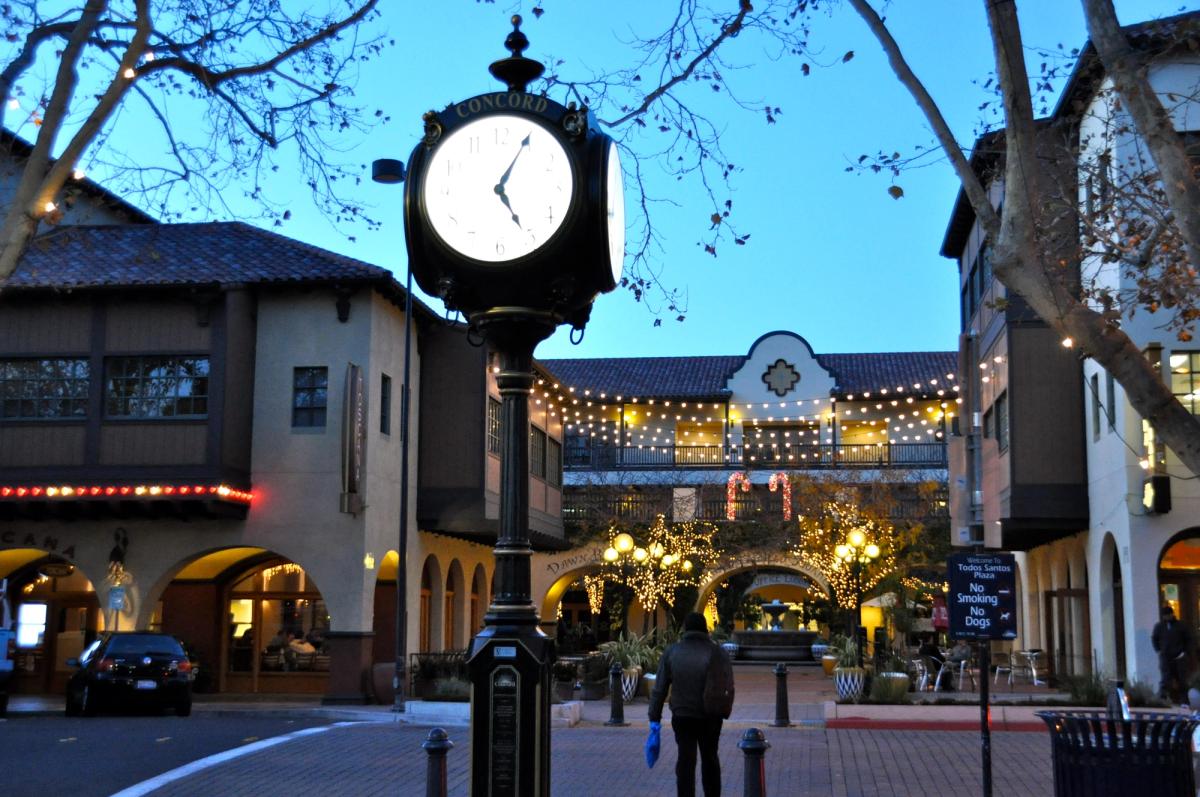
Concord is Contra Costa County's largest city by population — and one of the few inner Bay Area markets where the median sale price still sits under $750,000. As of March 2026, Concord's median sold at $725,000, down 2.7% year-over-year, with homes moving in roughly 13-21 days at an average of 3 offers per listing (Redfin Concord). Adjacent to the BART system, anchored by a Kaiser regional hospital, and now sitting on top of a 2,300-acre former Naval Weapons Station redevelopment that will add 12,200 homes and 6 million square feet of commercial space (SF YIMBY on the Brookfield Concord plan), Concord is the East Bay city most likely to see a structural shift in supply and demand inside the next decade.
The headline numbers obscure a real neighborhood-level story. Clayton Valley — the established east-Concord SFH corridor — runs $765,000 at the median (Redfin Clayton Valley). Dana Estates and the city's mid-century ranch corridors sit a tier below in the $620K-$700K band (Redfin Dana Estates). Downtown Concord condo and townhome inventory near the BART corridor trades on a different demand pattern than the SFH corridors, often serving first-time buyers and downsizers.
This guide covers what the data actually says, where the neighborhood gaps sit, what the BART/employer-driven demand layer looks like, and what the commission economics mean for a seller at the $700K-$800K Concord ticket.
Concord Market Snapshot — May 2026
The headline numbers, side-by-side with the relevant context.
| Metric | Concord (Citywide) | Clayton Valley (sub-mkt) | Notes |
|---|---|---|---|
| Median sale price | ~$725,000 | ~$765,000 | -2.7% YoY citywide |
| Days on market (median) | 13-21 days | ~29 days | Slower in established SFH corridors |
| Average offers per listing | 3 | 2-3 | Tighter than Bay Area inner cities |
| Sale-to-list ratio | ~99-100% | ~99% | More balanced than 105%+ inner Bay markets |
| Avg sale price (April 2026) | $733,040 | — | Citywide avg, all property types |
| LOQOL flat fee to list | $4,399 | $4,399 | Same fee at any price tier |
Sources: Redfin Concord, Redfin Clayton Valley, Movoto Concord, Zillow Concord.
Concord's Sub-Markets at a Glance
Concord covers roughly 31 square miles, and its housing stock spans mid-century ranches, postwar tracts, modern infill, downtown condos and townhomes, and the established Clayton Valley SFH corridor. The pricing variance between sub-markets is real and worth understanding before listing.
Clayton Valley (east Concord). Median $765,000, with the city's tightest established SFH corridor — strong school overlap, walkability to Mt. Diablo open space, and a buyer cohort that values the quieter east-side feel. DOM averages around 29 days (Redfin Clayton Valley).
Dana Estates. A mid-century ranch and two-story corridor that's typically among the more affordable established-SFH areas of the city. Strong family-buyer base; well-priced inventory routinely clears in 2-3 weeks (Redfin Dana Estates).
The Crossings (Walnut Country). A planned community with shared pools, tennis courts, and walking trails — strong family-buyer appeal, with HOA fees that need to be priced into the listing strategy. Buyers comparing The Crossings against Pleasant Hill HOA-free SFH stock will price-discount for the HOA.
Downtown Concord (BART-adjacent). Condo and townhome inventory near the Concord BART station, plus newer infill multi-family product. Buyer base skews first-time buyers and downsizers; the BART proximity is the primary pricing premium.
North Concord. The corridor adjacent to the former Naval Weapons Station and the future Brookfield-led 2,300-acre redevelopment. Long-term, this area carries the most upside-and-downside variance in Concord — the redevelopment will add 12,200 housing units, which is a meaningful supply event for the city (SF YIMBY on the project).
The implication for sellers: Concord pricing varies meaningfully by sub-market, and a seller in Clayton Valley should comp against the previous 60-90 days of Clayton Valley sales — not against the citywide median. A Dana Estates seller has a different comp set entirely. Mixing the comp sets is the most common Concord pricing error.
The 12,200-Home Wildcard: The Naval Weapons Station Redevelopment
The single most consequential supply event on the Concord horizon is the redevelopment of the 2,300-acre former Concord Naval Weapons Station (decommissioned 1999, Wikipedia background). The current developer plan, advanced through Brookfield, calls for 12,200 homes, 6 million square feet of commercial space, and 880 acres of parks and green space (SF YIMBY), with 25% of housing designated affordable.
For Concord sellers, the practical takeaways:
- Long-term supply tailwind. 12,200 housing units is a meaningful addition to Concord's housing stock (the city today has roughly 50,000 housing units). The development will be phased over many years, but the inventory addition is real and structurally relevant for longer-hold investors.
- North Concord and downtown commercial corridors stand to benefit most. The development sits north of the city core, closest to the North Concord BART station. SFH corridors farther south (Clayton Valley, Dana Estates) are less directly exposed.
- Job creation is the pricing-supportive factor. The plan calls for ~16,900 job opportunities. If realized, the employment base meaningfully strengthens Concord's structural buyer demand — the housing-side supply addition is offset by demand growth.
- Timing risk is real. KQED documented that the redevelopment has been in planning for 40+ years; sellers should not underwrite near-term price moves on the basis of the project. It is a 10-30 year story, not a 1-3 year story.
Schools and the Family-Buyer Layer
Concord is served by the Mt. Diablo Unified School District, with Clayton Valley Charter High School as one of the district's strongest charter-school options (GreatSchools Concord). For sellers, school-attendance overlap is a meaningful pricing factor in Clayton Valley and the Mt. Diablo Elementary attendance corridors.
Two practical effects:
- Family-buyer DOM is shorter inside strong school overlays. A Clayton Valley SFH inside the Mt. Diablo Elementary boundary clears faster than a comparable home outside the boundary, even at the same list price.
- Charter-school proximity is a meaningful Concord-specific pricing factor. Clayton Valley Charter High School draws families from across the district; SFH stock inside the priority enrollment area commands a small but real premium over otherwise-comparable Concord inventory.
Demand Drivers: Who Is Buying Concord in 2026
Concord's buyer base is anchored on three structurally durable demand pillars:
Inner-Bay equity migration. Sellers exiting Oakland, Berkeley, Alameda, or East SF SFH inventory and looking to right-size into a $700K-$900K Concord SFH represent a meaningful share of 2025-2026 transaction volume. The exchange of $1.4M-$1.8M East Bay equity for a paid-off or low-mortgage Concord SFH is a structurally common pattern.
BART corridor remote-flexible workers. Concord's two BART stations (downtown Concord and North Concord/Martinez) make it one of the most BART-connected cities in Contra Costa. Hybrid-workers commuting to SF or Oakland 1-3 days per week are a structural buyer cohort that supports demand in downtown condos and BART-adjacent SFH stock.
Kaiser Walnut Creek/Concord medical employer base. The Kaiser Permanente regional system, John Muir Health, and other medical employers anchor a meaningful share of Concord and Walnut Creek family-formation buyer demand. Medical professional household incomes ($200K-$500K) underwrite the city's $700K-$1M SFH band.
First-time buyer pricing accessibility. Concord remains one of the few inner Bay Area cities where a first-time buyer with strong dual income ($180K-$250K combined) can underwrite a $700K-$800K SFH purchase using FHA or conventional financing without parental assistance. This is a structural demand floor under the city's mid-tier inventory.
Days on Market — What "13 Days" Actually Hides
The citywide median DOM range of 13-21 days is real but blends across housing types and sub-markets. Broken out:
- Single-family homes citywide: ~13-21 days for well-priced inventory, with the strongest school-overlay listings clearing in 7-12 days.
- Clayton Valley SFH: ~29 days average (Redfin Clayton Valley) — the established east-Concord corridor sees more methodical buyer activity than the inner-city corridors.
- Downtown condo/townhome inventory: typically 30-50 days, with pricing-discipline-sensitive demand. Mispricing 5-10% above the comp set risks a 60+ day sit.
- Naval Weapons Station-adjacent inventory: longer DOM than the city average. Buyers underwriting that corridor are weighing the long-term redevelopment thesis, which adds time to decision-making.
Sellers should plan for a longer DOM if listing condo/townhome inventory or North Concord SFH near the redevelopment corridor. SFH inside Clayton Valley or strong school overlays clears more quickly when priced inside the comp band.
The Commission Math at Concord Pricing
At a $725,000 citywide median sale, a traditional 3% listing commission costs the seller $21,750. Add the buyer's-side cooperating commission (still typically 2.5% in much of the East Bay, though increasingly negotiable post-Burnett 2024 NAR settlement), and the total commission cost on a typical Concord home is $39,875-$43,500 (more on flat-fee vs commission economics).
At Clayton Valley pricing of $765,000, the listing-side 3% commission is $22,950. At a Mt. Diablo-adjacent premium SFH around $1M+, it climbs to $30,000+ for the listing side alone — and $55,000+ in total commission.
LOQOL's flat-fee listing model charges $4,399 to list and represent the seller — full MLS, full marketing, full transaction support — regardless of sale price. The math:
| Sale Price | Traditional 5% | Traditional 6% | Charlie AI | White Glove | You Keep vs 6% (Charlie AI) |
|---|---|---|---|---|---|
| $550,000 (downtown condo) | $27,500 | $33,000 | $4,399 | $8,000 | +$28,601 |
| $725,000 (citywide median) | $36,250 | $43,500 | $4,399 | $10,500 | +$39,101 |
| $765,000 (Clayton Valley) | $38,250 | $45,900 | $4,399 | $11,000 | +$41,501 |
| $1,000,000 (premium SFH) | $50,000 | $60,000 | $4,399 | $15,000 | +$55,601 |
For a Concord seller at the citywide median, the listing-side flat-fee savings is $17,351 versus a 3% commission. That number is roughly equivalent to two years of property tax on the same home — a real, retained-by-seller savings that shows up directly at closing.
LOQOL's listing service uses Charlie, the LOQOL AI agent, to drive routine listing operations — comp analysis, MLS setup, marketing scheduling, showing coordination, and 24/7 buyer-question response — while licensed California real estate professionals handle disclosure compliance, offer negotiation, contingency timelines, and closing coordination. That's how the flat-fee math holds up on both a $550K downtown condo and a $1M Clayton Valley SFH without cutting corners on service.
Run the numbers on your specific Concord address with LOQOL's savings calculator.
How a Concord Seller Should Price in 2026
Three pricing-strategy takeaways:
1. Comp inside your sub-market — Clayton Valley is not Dana Estates is not downtown. Citywide $/sqft averages obscure 15-25% pricing variance between corridors. The right comp set for a Clayton Valley listing is the previous 60-90 days of Clayton Valley sales; the right comp set for a downtown condo is the previous 60 days of BART-adjacent condo and townhome sales.
2. Don't over-anchor on the Naval Weapons Station story. The 12,200-home redevelopment is real but is a 10-30 year story. Listing pricing should reflect today's comp set, not a forward-looking redevelopment thesis. North Concord sellers in particular should expect normal DOM, not a redevelopment-driven premium.
3. Underwrite the full commission gap. A 3% listing-side cost on a $725K Concord sale is $21,750 — meaningful money on a market where the median household income is well below the equivalent figure. The flat-fee alternative isn't marginal; it's a meaningful retained-by-seller dollar amount at every Concord price tier.
For deeper detail on pricing strategy and the savings math, see LOQOL's pricing page and savings calculator. To compare to neighboring Contra Costa markets, see Walnut Creek Housing Market 2026, Lafayette Housing Market 2026, Orinda Housing Market 2026, Moraga Housing Market 2026, and Danville Housing Market 2026.
Concord Housing Market 2026 — FAQ
What is the median home price in Concord, CA in 2026?
The citywide median sale price sits around $725,000 (March 2026), down 2.7% year-over-year (Redfin Concord). The April 2026 average sale price was approximately $733,040 (Movoto Concord). Pricing varies meaningfully by sub-market.
How fast do homes sell in Concord?
Citywide median DOM ranges roughly 13-21 days for well-priced inventory, with average 3 offers per listing. Clayton Valley SFH averages around 29 days (Redfin Clayton Valley). Downtown condo/townhome inventory typically takes longer — closer to 30-50 days.
Which Concord neighborhood is most expensive?
Clayton Valley at around $765,000 (Redfin Clayton Valley) and the Mt. Diablo-adjacent premium SFH corridors trade above the citywide median. Premium SFH in strong school overlays can reach $1M+.
Which Concord neighborhood is most affordable?
Dana Estates and several mid-century ranch corridors are typically among the more affordable established-SFH areas of the city (Redfin Dana Estates). Downtown Concord condo and townhome inventory near BART starts in the $450K-$600K band depending on size and HOA load.
Is Concord a good place to sell a home in 2026?
Yes, with realistic pricing. The market is more balanced than 2021-2022 — sale-to-list ratios near 99-100% indicate buyers no longer routinely overbid asking. Well-priced SFH inside strong school overlays clears in 1-3 weeks; mispriced inventory can sit 30-60+ days. Concord's structural demand drivers (BART proximity, Kaiser/Muir employer base, inner-Bay equity migration) remain intact.
How much will I pay in commission to sell a home in Concord?
At a $725,000 sale, a traditional 3% listing commission costs $21,750; a 2.5% commission is $18,125. LOQOL's flat-fee listing model charges $4,399 for the listing side — saving roughly $17,351 versus a 3% percentage model. At Clayton Valley pricing of $765,000, the listing-side savings rises to roughly $18,551.
What's the deal with the Naval Weapons Station redevelopment?
The 2,300-acre former Concord Naval Weapons Station (Wikipedia) is being redeveloped under a Brookfield-led plan calling for 12,200 homes, 6 million square feet of commercial space, 880 acres of green space, and 25% affordable housing (SF YIMBY). The project is structurally meaningful but multi-decade in timeline; near-term Concord pricing isn't materially affected.
What schools serve Concord?
The Mt. Diablo Unified School District, with Clayton Valley Charter High School as one of the district's strongest charter options (GreatSchools Concord). Family-buyer demand is concentrated in the strong school overlays, with measurable price premiums for SFH inside the highest-rated attendance areas.
How does Concord compare to Walnut Creek and Pleasant Hill for sellers?
Concord is structurally cheaper than Walnut Creek (closer to $1.0M-$1.3M medians) and broadly comparable to Pleasant Hill on entry-tier and mid-tier SFH pricing. For sellers, Concord offers more first-time-buyer demand and broader BART-corridor demand than Walnut Creek's higher-priced market.
Related Reading
- Walnut Creek Housing Market 2026
- Lafayette Housing Market 2026
- Orinda Housing Market 2026
- Moraga Housing Market 2026
- Danville Housing Market 2026
- Berkeley Housing Market 2026
- Best Real Estate Agents in Walnut Creek (2026)
- Best Real Estate Agents in Lafayette (2026)
- LOQOL Pricing and Savings Calculator
- Sell Without Commission
Want more clarity like this?
Clear, actionable guidance on selling and buying — straight to your inbox.