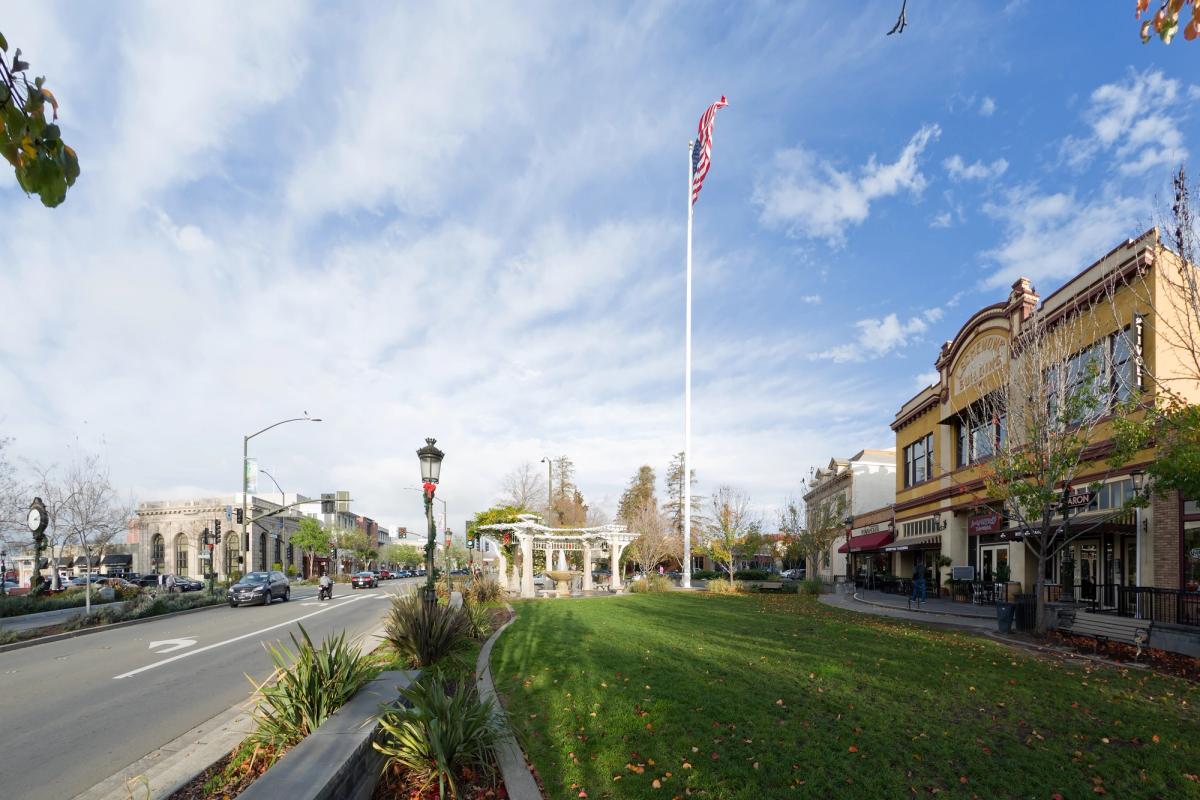
Livermore enters 2026 as the Tri-Valley's most economically diverse housing market — a city where a 1,400-square-foot Sunset East single-story on a flat lot sells for around $1.1M while a Ruby Hill Vineyard Estates home three miles away lists north of $3M on the same MLS. Citywide, Livermore's median sale price sits at about $1.2M in early 2026, down roughly 4.4% year-over-year, with homes selling in a median of 13 days — slower than last year's 9-day pace but still the kind of velocity that puts real pricing pressure on sellers who get the list price wrong.
What makes Livermore unusual inside Alameda County is that it trades less like a single city and more like two stacked markets: the mid-tier tract-home inventory that defines most of the east and north side, and the luxury vineyard-estate tier anchored by Ruby Hill, South Livermore, and parts of Livermore Valley. The city's median tells you almost nothing about what a particular house in either pocket should list for. The two tiers run on separate clocks — and in 2026, they moved in opposite directions.
This guide covers what the current numbers actually mean by neighborhood, how Livermore National Laboratory, Sandia, and the Tri-Valley's remote-work rebalance are shaping 2026 demand, and the honest commission math at both Livermore price points.
The Numbers (Verified, April 2026)
| Metric | Value | Source |
|---|---|---|
| Median sale price (Feb 2026) | ~$1.2M | Redfin |
| YoY median change | -4.4% | Redfin |
| Median days on market | 13 days | Redfin |
| Median DOM last year | 9 days | Redfin |
| Zip 94550 median | ~$1.3M | Redfin |
| Zip 94551 DOM | ~22 days | Redfin |
| LOQOL flat listing fee | $4,399 | loqol.ai |
Sources: Redfin — Livermore Housing Market, Redfin — 94550 Zip Code, Redfin — 94551 Zip Code, Zillow — Livermore Home Values.
Why the Citywide Median Is Misleading in Livermore
Livermore covers roughly 25 square miles split across two primary zip codes: 94550 (the older, denser city core plus south-side luxury) and 94551 (the newer east-side tract subdivisions stretching toward Greenville Road). The two zips move differently.
- 94550 currently carries a $1.3M median — heavier representation of the Ruby Hill / South Livermore luxury tier pulls this average up even though much of the zip is mid-tier tract.
- 94551 carries a longer 22-day median DOM, up from 13 last year, which signals more negotiation room and weaker competition in the newer east-side tracts.
The gap between these two zips is one of the widest single-city splits in Alameda County. A $1.4M ask in a 94550 Ruby Hill-adjacent home reads aspirational but defensible; the same $1.4M ask in a 1990s-era 94551 tract comp in 2026 will sit on the market and trigger reductions.
Livermore sellers who price off a "city median" comp set are consistently mispricing by 8–15% in either direction.
Neighborhood-by-Neighborhood Pricing
1. Ruby Hill / Ruby Hill Vineyard Estates (Luxury, Gated)
Livermore's premier address. A gated community wrapped around a Jack Nicklaus-designed championship golf course with nearly 900 luxury homes and custom estates. Typical range in 2026: $2.2M–$4.5M+, with custom vineyard estates on larger lots clearing $5M in select cycles. Ruby Hill homes trade closer to Danville / Blackhawk comps than to Livermore's city median — pricing a Ruby Hill listing off Livermore-wide data is the fastest way to leave money on the table. Buyer pool here is dual-income Tri-Valley executives, Bay Area cash-out equity buyers, and SF-to-Tri-Valley remote-work migration that stuck post-2021.
2. South Livermore / Wine Country Estates
The stretch south of Tesla Road and east of the downtown core. Custom and semi-custom homes on acreage lots, many with their own small vineyards. Typical range: $1.6M–$3.2M, with acreage parcels and equestrian-zoned lots pricing above that ceiling. DOM tends to run longer than city average — custom features make comps harder to pull and buyers are more selective. The upside is that when the right buyer shows, list-to-sale ratios are strong and contingencies are clean.
3. Downtown Livermore (94550, City Core)
One of the more interesting data points in the 2026 numbers. Downtown Livermore's February 2026 median was $880K, up 85.2% year-over-year, while DOM dropped to 46 days from 105. That headline number overstates the trend — it reflects a relatively small sale count and a compositional shift toward larger, renovated homes and downtown condos. The real takeaway: downtown Livermore is being reshaped by new construction, wine-country-adjacent restaurant growth, and the First Street theater-and-tasting-room build-out. Typical single-family range now: $850K–$1.3M, with newer downtown condos in the $600K–$850K band.
4. Sunset East (Central, Mid-Century Tract)
One of Livermore's most stable value neighborhoods. Sunset East's January 2026 median was $1,126,000, down 18.4% year-over-year. Built between 1968–1973 by Sunset Development — mostly single-story homes between 1,000–2,300 sqft on 7,000–10,000 sqft lots with two-car garages. Ideal for first-time Tri-Valley buyers, downsizers from Pleasanton and San Ramon, and families who want yards and driveable schools without the Ruby Hill premium. Typical range: $950K–$1.35M, with fully remodeled versions clearing $1.5M.
5. Northside Livermore
Modest 2026 softness. Median $810K in February, down 16.9% year-over-year, with DOM at 26 days versus 12 a year ago. Northside's pricing reset reflects what happens when a neighborhood that saw heavy pandemic-era speculation normalizes — the short-DOM gold rush is over, and normal 30-day sale cycles with realistic comps are back.
6. Summerset / Summerset 55+ Communities
Livermore's age-restricted community market is a discrete sub-segment. Summerset condos and detached homes for the 55+ demographic trade in the $550K–$1.1M band depending on size and model. This inventory is sensitive to HOA dues, active-adult amenity investment, and the broader Tri-Valley downsizing wave. Buyer pool is specifically retirement-age; pricing strategy differs materially from general-market Livermore inventory.
7. 94551 East-Side Tracts (Greenville / Springtown / Portola)
The eastern tract subdivisions — many built in the 1990s and 2000s — are where Livermore's 2026 inventory loosening shows most clearly. The 22-day median DOM, up from 13 last year, reflects a cooling tech-driven demand pool (fewer long-haul commuters from Fremont / San Jose driving to Livermore for price) and modest rate-sensitive first-time buyer hesitation. Typical range: $1.05M–$1.55M.
What's Actually Driving 2026 Livermore Demand
Lawrence Livermore National Laboratory and Sandia National Labs remain the single largest private-sector wage anchor for the local market. Ph.D.-level scientists, engineers, and defense-sector professionals represent a significant share of Livermore's buyer pool — a demographic that tends to be price-disciplined, long-hold, and more interested in school catchment and commute than trend-chasing view premiums. This buyer segment shows up disproportionately in Sunset East, Springtown, and the newer 94551 tracts.
The Livermore Valley wine region — over 50 wineries within a short drive of downtown — has pulled in a parallel cohort of Bay Area weekend-equity buyers and retirees liquidating more expensive Peninsula or South Bay homes to move into Ruby Hill, South Livermore, and the wine-country estate tier. That buyer pool behaves very differently from the lab-worker pool. Cash offers, larger down payments, and willingness to close without contingencies are common at the $2M+ tier.
Tri-Valley remote-work migration from the post-2021 window has partially stabilized but is no longer a net-new demand driver. The city's housing-market softening relative to 2022–2024 reflects the tapering of that migration wave; the lab-and-wine buyer pools are now the baseline.
The ACE rail and Livermore-Pleasanton BART extension (still phased through 2028+) continues to shape expectations for long-term commute convenience without meaningfully pulling forward current pricing — Livermore buyers in 2026 are primarily weighting today's commute, not projected 2029 rail access.
School Districts and the Quiet Premium
Livermore Valley Joint Unified School District is the primary catchment. The top-performing elementary catchments — Joe Michell, Altamont Creek, and Smith — carry a measurable pricing premium of roughly 5–8% over otherwise identical homes in lower-ranked catchments. Granada High vs. Livermore High feeds are a long-standing local sub-premium (Granada typically commands the higher out-of-catchment interest among relocating families). For Ruby Hill and South Livermore buyers, school catchment matters less — that tier heavily uses private schools or cross-district open-enrollment pathways.
Commission Math at Livermore Price Points
Livermore's wide price spread means the commission dollar value changes dramatically by neighborhood. Here is the honest side-by-side at three realistic 2026 Livermore sale prices.
| Sale Price | Traditional 5% | Traditional 6% | Charlie AI | White Glove | You Keep vs 6% (Charlie AI) |
|---|---|---|---|---|---|
| $1,100,000 (Sunset East) | $55,000 | $66,000 | $7,999 | $16,000 | +$58,001 |
| $1,300,000 (94550 median) | $65,000 | $78,000 | $7,999 | $18,000 | +$70,001 |
| $2,500,000 (Ruby Hill) | $125,000 | $150,000 | $12,999 | $35,000 | +$137,001 |
| $3,500,000 (Ruby Hill Estate) | $175,000 | $210,000 | $19,999 | $50,000 | +$190,001 |
Assumes 2.5% listing-side commission only. Buyer-side commission is separately negotiated under the 2024 NAR settlement framework; Charlie, LOQOL's AI listing agent, structures the buyer-side cooperation field the same way a traditional agent does.
A Ruby Hill seller closing at $3.5M today writes a ~$87,500 listing-side check to a traditional agent. That number is not calibrated to the work. It is a percentage of the asset — a fee structure inherited from 1950s practice, before zip-level comp data, before MLS was an API, and before LOQOL's AI listing platform could automate disclosures, photo-metadata tagging, and MLS sync in minutes.
Two Strategy Questions Every Livermore Seller Should Answer
1. Is your house in a zip that's tightening or loosening?
94550 is tighter (shorter DOM in the luxury tier, price discipline holding in the mid-tier); 94551 is meaningfully looser (DOM up, negotiation room open). If you're in 94551, assume 30–45 days to sale, price competitively from day one, and expect at least one concession. If you're in 94550, pricing slightly above comp median is defensible — but only slightly.
2. Is your buyer pool the lab worker or the wine-country cash-out buyer?
A Sunset East listing aimed at LLNL engineers needs crisp photos, a clean disclosure package, and a realistic ask. A Ruby Hill listing aimed at Peninsula equity-migration buyers needs dialed-in staging, video, and a pricing strategy that respects what those buyers are already paying in Danville and Lafayette. Same city, two different launch playbooks.
Where LOQOL Fits
LOQOL is a modern, AI-native listing brokerage. For a flat $4,399, a Livermore seller gets full MLS syndication, disclosure package generation, buyer inquiry routing, offer-handling workflow, and closing coordination — the same workflow a traditional 2.5% listing agent provides, priced to the work instead of the sale price.
For Sunset East and Northside Livermore sellers at the $1.0M–$1.35M tier, that's roughly $23K–$30K retained in equity on an otherwise identical closing.
For Ruby Hill and South Livermore sellers at the $2.5M+ tier, the retained equity scales to $55K–$85K+.
The LOQOL savings calculator runs your specific Livermore sale price through both models. The sell-without-commission guide walks through the step-by-step listing flow.
FAQ
What is the median home price in Livermore in 2026?
Roughly $1.2M, down about 4.4% year-over-year, per Redfin's February 2026 data. Zip-level medians range from $1.3M in 94550 to a longer DOM / softer environment in 94551.
How long do Livermore homes take to sell?
Median DOM is 13 days, up from 9 days a year ago. The 94551 east-side tracts run longer at ~22 days; Ruby Hill and South Livermore luxury can run 30+ days but trade at stronger list-to-sale ratios when they close.
Are Livermore home prices falling?
Year-over-year the citywide median is down ~4.4%. Neighborhood-level direction varies widely — Downtown Livermore's sale-price mix is sharply up (small-sample, compositional), while Northside and Sunset East reset lower as pandemic-era demand faded.
How much do real estate commissions cost to sell a home in Livermore?
A traditional 2.5% listing commission on a $1.3M Livermore sale is $32,500. On a $2.5M Ruby Hill sale it's $62,500. LOQOL's flat fee is $4,399 regardless of sale price.
What is the best neighborhood in Livermore?
"Best" depends on buyer profile. Ruby Hill is the luxury anchor; Sunset East is the stable mid-tier value neighborhood; South Livermore is the wine-country estate option; Downtown Livermore is the walkable new-build / condo option. For families prioritizing schools, Altamont Creek and Joe Michell Elementary catchments command a 5–8% premium.
Does LOQOL list luxury homes in Livermore like Ruby Hill?
Yes. LOQOL's flat $4,399 fee applies at every price point — including Ruby Hill estate listings clearing $3M+. The listing-side dollar savings get larger as the sale price rises because the traditional commission is a percentage and the LOQOL fee is not.
Related Reading
- Sell Your Home Without Paying Commission — The full LOQOL flat-fee listing workflow
- LOQOL Savings Calculator — Run your Livermore sale price through both commission models
- Pleasanton Housing Market 2026 — The adjacent Tri-Valley city's 2026 numbers for cross-market comparison
Want more clarity like this?
Clear, actionable guidance on selling and buying — straight to your inbox.