
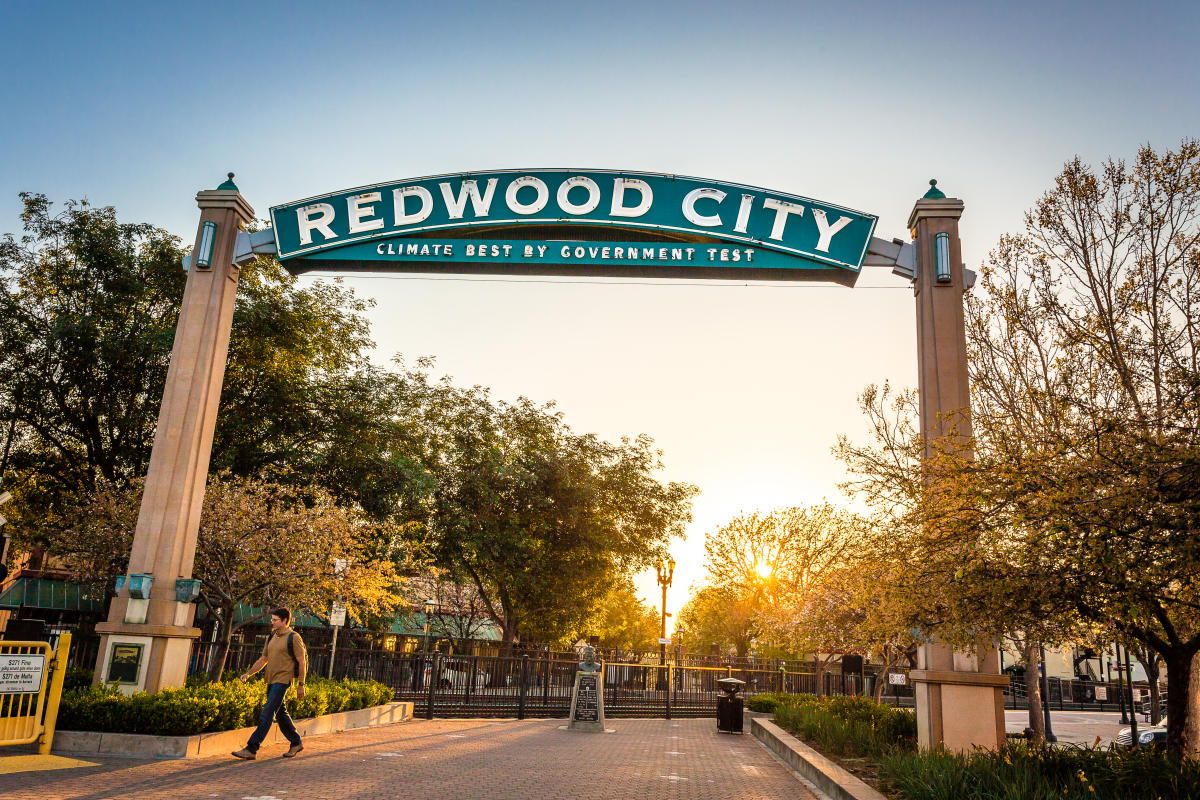
Redwood City's median home price is about $1.8 million in 2026, with homes selling in roughly 13 days. At that median, a traditional 6% commission costs about $108,000 — while a flat-fee brokerage like LOQOL lists the same home for a flat $4,399.
Redwood City's real estate market is redefining itself as a premium Bay Area destination. With a median home price of $1.8 million and homes selling above asking price, the Silicon Valley submarket is attracting tech workers, executives, and families seeking established neighborhoods with excellent schools and proximity to major employers like Oracle and Electronic Arts.
How Much Commission Do Redwood City Sellers Pay in 2026?
| Sale Price | Traditional 5% | Traditional 6% | LOQOL Charlie AI | LOQOL White Glove | You Keep vs 6% (Charlie AI) |
|---|---|---|---|---|---|
| $1,300,000 (entry / Friendly Acres) | $65,000 | $78,000 | $7,999 | ~$17,000 | $70,001 |
| $1,800,000 (Redwood City median) | $90,000 | $108,000 | $7,999 | ~$25,000 | $100,001 |
| $2,400,000 (Mt. Carmel / Emerald Hills) | $120,000 | $144,000 | $12,999 | ~$33,000 | $131,001 |
| $3,100,000 (Emerald Hills luxury) | $155,000 | $186,000 | $19,999 | ~$45,000 | $166,001 |
| Metric | Redwood City | San Mateo County | YoY Change |
|---|---|---|---|
| Median Home Price | $1,800,000 | $1,930,000 | +4.1% |
| Days on Market | 13 days | 21 days | −38% |
| Sale-to-List Ratio | 103% | 101% | +2% |
| Inventory (Months Supply) | 1.4 | 1.9 | −26% |
| Major Employers Nearby | Oracle, EA, Box | Varies | — |
This guide breaks down what's actually selling, which neighborhoods command the highest premiums, and how much you can realistically save when selling your Redwood City home through a flat-fee model instead of traditional 5-6% commissions.
Redwood City Housing Market at a Glance
Current Market Snapshot (February 2026):
- Median Home Price: $1.8M (down 1.9% year-over-year per Redfin data)
- Average Home Value: $1,733,597 (up 0.1% year-over-year per Zillow)
- Days on Market: 13 days
- Sale-to-List Ratio: 103.42% (homes selling above asking)
- Inventory: Approximately 2 months supply
- 2026 Price Forecast: 2-4% appreciation expected
The market shows stability with a slight contraction from 2025, but the healthy sale-to-list ratio above 100% indicates strong buyer demand. Homes are spending just two weeks on the market, suggesting that well-priced inventory moves quickly in Redwood City's competitive landscape.
Why the 1.9% Decline Is Misleading
The year-over-year decline reflects seasonal softness in early 2026 rather than a fundamental weakness in the market. Redfin's 2026 forecast calls for 2-4% appreciation, and the sale-to-list ratio above parity confirms sustained buyer competition. Sellers who understand their neighborhood's true value and price accordingly will see strong results.
Neighborhood Price Breakdown: Where the Premiums Are
Redwood City's price variation by neighborhood is dramatic. A home in Redwood Shores can sell for nearly twice the price of an equivalent home in Palm Park—not just because of square footage, but because of schools, views, planned community amenities, and proximity to major tech hubs.
Redwood Shores: $2.62M Median—Waterfront Living Meets Tech Convenience
Redwood Shores commands the highest median price in the city at $2,621,200. This planned community offers:
- Bay-side waterfront and marina access
- Planned community amenities (parks, trails, docks)
- Direct proximity to Oracle's Redwood City offices
- Strong appeal to tech executives and families relocating to the Bay Area
- Modern, architecturally cohesive neighborhoods
Homes here rarely last beyond two weeks on the market. Buyers view Redwood Shores as the premium option for tech professionals seeking established infrastructure without the Silicon Valley congestion of closer-in areas.
Farm Hill and Oak Knoll: $2.45M–$2.49M—Hillside Views and Privacy
These hillside communities command $2.45M–$2.49M medians, attracting buyers seeking:
- Scenic views of the Bay or Santa Cruz mountains
- Larger lots and privacy
- Established, mature neighborhoods
- Good schools (Sequoia Union High School District coverage)
- Quiet, residential character despite urban proximity
Emerald Hills: $2.5M+—Historic Luxury Community
Emerald Hills represents Redwood City's most exclusive enclave, with homes regularly priced above $2.5M. Dating back to 1927, this hillside community offers:
- Historic estates and custom homes
- Established lot sizes and mature landscaping
- Scenic hilltop locations
- Limited inventory (exclusivity drives premium pricing)
Woodside Plaza: $2.2M—Established Suburban Feel
Woodside Plaza's $2.2M median reflects a well-established neighborhood with reliable schools, nearby shopping, and good freeway access. It appeals to families seeking suburban amenities without the highest-tier pricing.
Palm Park: $1.56M—Entry Point for First-Time Buyers
Palm Park represents the most accessible entry point to Redwood City homeownership at $1.56M median. While schools are adequate, this neighborhood lacks the prestige pricing of hillside or waterfront alternatives. It's ideal for buyers prioritizing affordability and renovation potential.
Downtown/Central Redwood City: Mixed $1.2M–$1.8M—Urban Revitalization in Progress
Downtown Redwood City has undergone significant revitalization. The walkable downtown core features:
- New restaurants and retail
- Courthouse Square public plaza
- Mixed-use residential/commercial development
- Younger demographic appeal (easier commuting to Stanford, Sand Hill Road)
- Price variability based on exact location and unit type
The School Impact: How Sequoia Union District Drives Pricing
School ratings are the single largest driver of neighborhood price premiums in Redwood City. The Sequoia Union High School District serves the area, and individual school ratings can add or subtract $200K–$500K from a comparable home's value.
Top-Rated Schools
Sequoia High School (7/10 GreatSchools rating, "A" on Niche) feeds into premium neighborhoods like Farm Hill and Oak Knoll. Families will pay substantially more for homes in Sequoia's attendance zone.
Roy Cloud Elementary and John Gill Elementary are well-regarded primary schools that anchor family-friendly neighborhoods and justify premium pricing.
Lower-Rated Schools Impact Pricing
Redwood High School (1/10 GreatSchools rating, "C" on Niche) serves as an alternative school and does not carry the same weight in buyer decision-making. Homes in this attendance zone typically sell at discounts of 10–15% compared to Sequoia High-zoned equivalents.
Key Takeaway: If you're selling in a Sequoia High School zone, emphasize school ratings in your listing. Families actively research this data through GreatSchools and Niche, and the premium is real and measurable.
Economic Drivers: Why Redwood City Attracts Buyers
Major Employers and Tech Proximity
Oracle has significant presence in the Redwood Shores area, making it the single largest job center. Employees at Oracle, EA, and other Redwood City tech firms actively seek nearby housing to minimize commutes.
Electronic Arts (EA) headquarters brings high-income employees who value established neighborhoods and good schools.
Box (cloud content management) and other mid-size tech firms round out the employer base.
Stanford University Proximity and Sand Hill Road VC Corridor create a broader tech ecosystem effect. While not in Redwood City proper, their proximity to Palo Alto and Mountain View makes Redwood City an attractive middle-ground for venture capitalists, entrepreneurs, and Stanford-affiliated workers seeking slightly more affordable real estate.
Downtown Revitalization and New Development
Redwood City's downtown core has transformed in recent years. New restaurants, retail, and mixed-use developments have created a "walkable urban village" feel that appeals to younger professionals and downsizers. This trend supports continued price appreciation in central Redwood City.
The Commission Math: Why Flat-Fee Models Save Money on $1.8M Homes
On a $1.8M home sale in Redwood City, the choice of commission structure can mean saving $60K–$108K.
Traditional 5–6% Commission Model
- 5% commission: $90,000
- 6% commission: $108,000
- This is the market standard most sellers expect to pay to traditional brokerages.
Discount Brokers (1.5% Listing Commission)
- 1.5% commission: $27,000
- Redfin popularized this model, but it often comes with reduced marketing and buyer-side incentives that can actually extend selling time.
Flat-Fee Models ($5K–$15K Range)
- Typical range: $5,000–$15,000
- Fixed cost regardless of sale price
- Your savings vs. 5% traditional: $75,000–$85,000
LOQOL's $4,399 Flat Fee
- LOQOL's flat fee: $4,399 (all-inclusive)
- Savings vs. 5% traditional: $85,601
- Savings vs. 6% traditional: $103,601
This comparison assumes no buyer-side commission negotiation. Even accounting for typical buyer-side incentives, a flat-fee seller still saves $40K–$60K on a $1.8M Redwood City sale.
Interactive Savings Calculator
Use LOQOL's savings calculator to see exactly how much you'd save on your specific Redwood City home price. Most sellers are surprised by the difference.
Why Flat-Fee Models Work in a Strong Market
Redwood City's 13-day average time on market and 103.42% sale-to-list ratio confirm that homes sell themselves in this market. Strong buyer demand, limited inventory, and well-publicized market conditions mean your home doesn't need the traditional agent's "open house circuit." Flat-fee sellers compete on price and listing quality, not agent visibility.
Redwood City Real Estate Trends in 2026
Trend 1: Tech Relocation Driving Supply Constraints
Post-pandemic office returns at Oracle, EA, and other major employers have re-anchored buyer demand in Redwood City. Remote work is still common, but hybrid arrangements are creating a "talent magnet" effect for nearby suburbs. Supply remains constrained.
Trend 2: School Ratings as Competitive Advantage
First-time buyers and young families continue to prioritize schools above all other factors. Homes in Sequoia High School zones command measurable premiums, and this trend is unlikely to reverse.
Trend 3: Hillside and Waterfront Premiums Widening
The gap between hillside/waterfront homes ($2.5M+) and more affordable central neighborhoods ($1.2M–$1.6M) continues to widen. Buyers with budgets above $2.2M are increasingly selective about views, lot size, and exclusivity.
Trend 4: Downtown Walkability Attracting Younger Buyers
Downtown Redwood City's revitalization is attracting a younger demographic (25–45 age range) who prefer walkable urban cores to suburban cul-de-sacs. This is creating new demand pockets and supporting price appreciation in central neighborhoods.
How to Position Your Redwood City Home for Maximum Offers
1. Understand Your Neighborhood's True Comparable Sales
Don't rely on Zillow "Zestimate" or generic county data. Redwood City's price variation is so high that comparable sales analysis by neighborhood is essential. Farm Hill comparables ($2.45M) are meaningless when selling in Palm Park ($1.56M).
Use Redfin's Redwood City market data and Zillow's neighborhood home values to identify sales in your exact neighborhood from the past 30–60 days.
2. Lead with Schools If You're in a High-Rated Zone
If your home feeds into Sequoia High School or a highly-rated elementary school, emphasize this in your listing. Link to GreatSchools ratings and highlight test scores, safety, and parent satisfaction data.
3. Highlight Proximity to Major Employers
If you're in Redwood Shores or within easy commute distance of Oracle or EA offices, emphasize commute times and proximity. Tech workers will pay for convenience.
4. Emphasize Bay Views or Lot Size in Hillside Neighborhoods
Farm Hill, Oak Knoll, and Emerald Hills buyers are paying a premium for views and privacy. Professional photos, drone footage, and sunset-time video tours justify the high asking price.
5. Spotlight Downtown Walkability If You're Central
If you're in downtown or near Courthouse Square, emphasize walkable amenities, new restaurants, and urban convenience. This appeals to younger buyers and professionals seeking lower-maintenance lifestyles.
When to Sell Your Redwood City Home
Optimal Timing: April–June
Spring is peak buying season nationwide, but especially in Redwood City. Tech workers receive bonus payouts and stock options around March–April, creating peak liquidity. Combined with 13-day average market time and strong buyer competition, spring is when you'll see the highest offer volume and the lowest negotiation resistance.
Secondary Window: September–October
After summer vacations, returning families and employees create a second surge in demand. Schools are in session (a plus for family buyers), and the region sees a secondary influx of tech workers finalizing relocations.
Months to Avoid: November–December
Holiday season, winter weather perception, and lower buyer traffic all depress activity. Unless you have a specific reason (job transfer, relocation), waiting until spring typically yields higher offers.
Current Market Conditions (April 2026)
You're reading this in mid-April 2026—an optimal time to list. Buyer demand is high, inventory is constrained, and the 2–4% price appreciation forecast provides seller confidence. If you've been considering selling, spring is the window.
Selling Your Home Without Traditional Commission
LOQOL's flat-fee selling model removes the traditional 5–6% commission burden while maintaining professional marketing, listing services, and buyer-side coordination.
What You Get With a LOQOL Flat Fee
- Professional listing on all major portals (MLS, Zillow, Redfin, Trulia)
- Professional photography and virtual tours
- Buyer-side coordination and offer management
- Closing support and title company coordination
- AI-assisted pricing guidance powered by Charlie, LOQOL's AI agent
- All-inclusive service for exactly $4,399
What You Save
On an $1.8M Redwood City home:
- vs. 5% traditional: $85,601 saved
- vs. 6% traditional: $103,601 saved
- vs. 1.5% discount brokers: $22,601 saved (and with better service)
Explore Your Savings
Start with LOQOL's pricing page to understand the flat-fee model. Then use the savings calculator to see your exact savings on your Redwood City home.
Redwood City Housing Market FAQ
Q: What's a realistic asking price for a $1.8M comparable home in Redwood City?
A: List at market value ($1.8M) and expect offers 1–3% above asking in this market. Homes selling above asking (103.42% sale-to-list) is the norm, not the exception. Overpricing (above comparable sales) will sit on the market; underpricing will trigger bidding wars. Precision matters.
Q: How much do schools impact Redwood City home prices?
A: Significantly. A home in a Sequoia High School zone will command 10–15% premium over an identical home in a lower-rated school district. For a $2M home, that's $200K–$300K in price difference purely from school access. When listing, emphasize school ratings heavily.
Q: Is Redwood City a good market for sellers right now?
A: Yes. The 13-day average market time, 103%+ sale-to-list ratio, and constrained inventory all favor sellers. Combined with the 2–4% price appreciation forecast and strong tech sector employment, 2026 is a seller's market in Redwood City. If you've been considering selling, now is the time.
Q: What's the difference between the $1.8M median and the $1.73M average?
A: The median (middle point of all sales) reflects the "typical" home, while the average is influenced by outliers. The $1.8M median is more meaningful for understanding what an average Redwood City home actually sells for. The $1.73M average suggests some very expensive sales (Redwood Shores, Emerald Hills) are pulling the math higher, but the median $1.8M is the better reference point.
Q: Will Redwood City appreciate more in 2026?
A: Redfin forecasts 2-4% appreciation for Redwood City in 2026. This is modest but real, driven by limited inventory, strong tech employment, and good schools. Don't expect the dramatic 10-15% gains from 2020–2021, but steady appreciation is realistic.
Q: How much do I save by avoiding a 5–6% commission?
A: On an $1.8M Redwood City home, you save $85,601 (vs. 5%) or $103,601 (vs. 6%) by using a flat-fee model. That's the difference between clearing $1.714M (after 5% commission) and clearing $1.796M (after $4,399 flat fee). The savings compound on larger sale prices.
Next Steps: Selling Your Redwood City Home
- Review your neighborhood's comparable sales using Redfin data and Zillow home values.
- Calculate your potential savings with LOQOL's savings calculator to understand how much a flat-fee model saves you vs. traditional commission.
- Explore LOQOL's flat-fee pricing at loqol.ai/#pricing and read How to Sell Without Commission.
- Check agent ratings for Redwood City by reading Best Real Estate Agents in Redwood City 2026.