The Sunnyvale housing market in 2026 has a median sale price of $1,830,000 — down 12.8% year over year — with homes selling in about 40 days at 106.9% of list price (Houzeo, July 2026). A 6% commission at that median is $109,800; Loqol offers a 2.5% seller-side commission with full-service representation.
Sunnyvale Is Where Mid-Century Modern Architecture Meets Silicon Valley Money
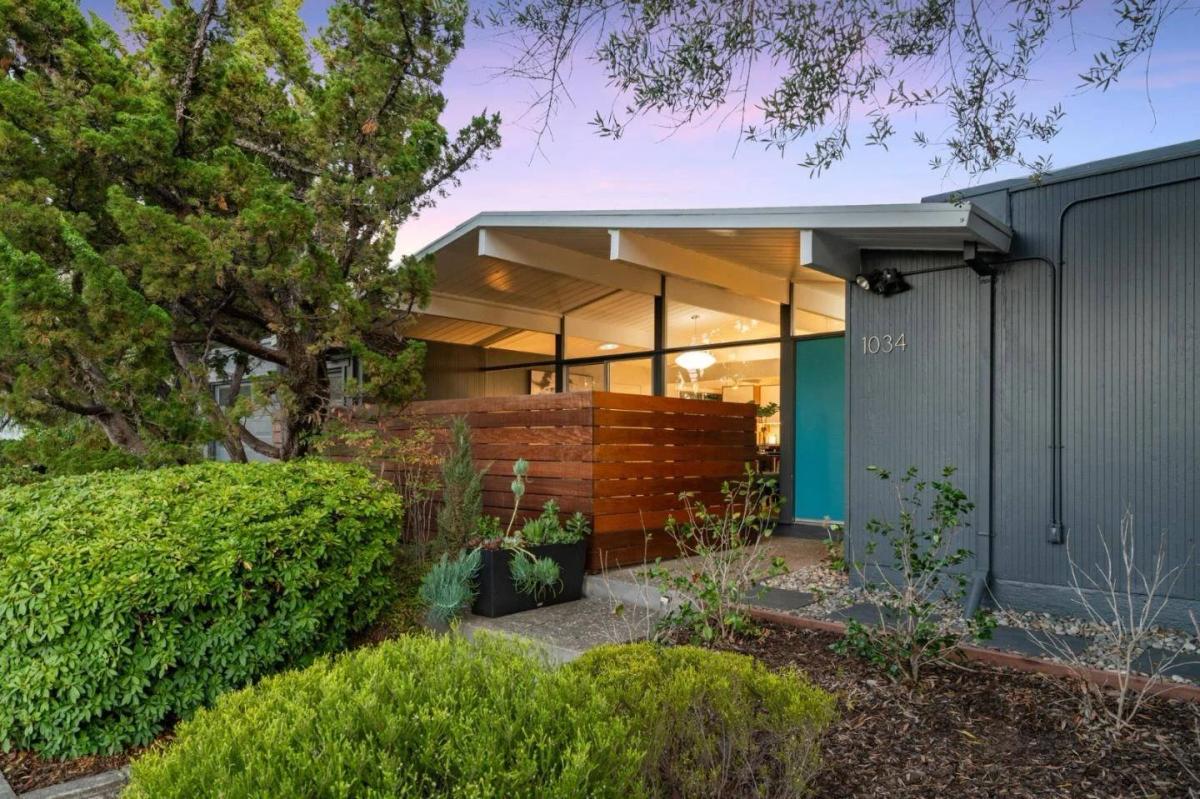
Walk down Fairbrae Drive on any Saturday in Sunnyvale and you'll see it: rows of clean-lined Eichler homes with their signature open floor plans, exposed beams, and glass walls opening to courtyards. A real estate agent new to the Bay Area might see these 1950s and 1960s homes and think they're quirks of history. An experienced agent—and a smart seller—knows they're the defining asset of Sunnyvale's entire real estate market.
This is where Joseph Eichler built his vision of affordable-yet-sophisticated American homes. This is where 1,100 Eichler houses stand today—the largest concentration anywhere in the country. And in 2026, these mid-century icons are commanding a 50-60% premium over Sunnyvale's already-robust citywide median of $1.92 million.
If you're a Sunnyvale homeowner—especially an Eichler owner—you're sitting on an asset that the national real estate market doesn't fully understand. Yet. Homes here are selling in just 9 days. Five offers are average. And 111% of asking price is the norm for single-family homes. This isn't a market; it's a seller's advantage hiding in plain sight.
The Numbers: A Snapshot of Sunnyvale's 2026 Market
At first glance, Sunnyvale's median sale price of $1,830,000 (July 2026) still tells the story of Silicon Valley adjacency — even after a 12.8% year-over-year correction. But the real story requires looking deeper — into the Eichler tracts, the neighborhood tiers, and what 0.63 months of supply does to pricing.
The Overall Market:
- Median sale price: $1,830,000 (Houzeo, July 2026)
- Single-family homes average about $2,600,000; condos average about $794,000
- Year-over-year change: −12.82% (a correction after the 2025 run-up)
- Days on market: 40.5 days (median)
- Homes sold in July 2026: 144 (−12.2% vs July 2025)
- Sale-to-list ratio: 106.92% — the average sale still closes about 7% above asking
- Listings with price reductions: 27.27% (up from 20% a year ago)
- Homes selling above asking: 65.91% (down from 80% YoY)
This is a cooling-but-tight market. The median is down 12.8%, yet supply sits at just 0.63 months — 91 active homes for a city of 150,000+ — and two of every three sales still close above list. Prices corrected; seller leverage didn't.
| Metric | Value (July 2026) | Context |
|---|---|---|
| Median Sale Price | $1,830,000 | −12.82% year-over-year |
| Median Days on Market | 40.5 days | The single-digit frenzy has normalized |
| Sale-to-List Ratio | 106.92% | 65.91% of July sales closed above asking |
| Months of Supply | 0.63 months | 91 active homes; 43 newly listed |
| Homes Sold (July 2026) | 144 | −12.2% vs July 2025 |
| Condo Average / SFH Average | $794,000 / $2,600,000 | Two very different buyer pools |
Source: Houzeo Sunnyvale Housing Market Report (July 2026 data, accessed August 2026)
The Eichler Factor: Why Sunnyvale's 1,100 Mid-Century Homes Command a 50-60% Premium
Here's what separates Sunnyvale from every other affluent Bay Area town: Joseph Eichler didn't just build homes here. He built his laboratory. He perfected his method here. He proved his vision here before scaling it to a few thousand homes across California.
The Eichler Concentration: 1,100 Homes Across 16+ Tracts
Between 1950 and the early 1970s, Eichler Homes built sixteen major subdivisions in Sunnyvale. That's 1,100 mid-century modern homes in a single city. For context, most Bay Area towns have fewer than 200 Eichlers. Sunnyvale has more than five times that concentration.
Each tract has its own character, defined by the year it was built and the refinements Eichler made to his original design concept:
Fairorchard (1958): The earliest large Eichler tract in Sunnyvale—ground zero for the mid-century modern experiment. These homes have the clean geometry of pioneering design, with the structural simplicity and potential renovation costs that come with first-generation builds. They're historically significant but often require more capital improvement than later tracts.
Fairbrae (Mid-1950s): The largest Eichler enclave in Sunnyvale, with 350+ homes. Fairbrae represents Eichler's refined approach—the tracts where buyers discover why the architect's vision became iconic. Clean lines, open courtyards, living spaces that blur indoors and outdoors. These homes have appreciated steadily and hold resale value like few others. A well-maintained Fairbrae Eichler is a trophy asset.
Cherry Chase (Mid-1950s to early 1960s): More heterogeneous than pure Eichler tracts, Cherry Chase blends Eichler homes with mid-century ranch properties and later infill. The 2,400+ homes here span a wider price range ($1.6M–$2.8M). Atrium-model Eichlers from around 1961 within Cherry Chase represent a sweet spot: smaller than later models, which appeals to young tech buyers and empty nesters, but with full Eichler pedigree.
Fairwood (1961-1962): Popular period Eichlers with slightly expanded floorplans compared to Fairbrae. These homes have appreciated meaningfully as buyers have rediscovered the open-living aesthetic that tech-industry buyers now crave.
Rancho Verde (1961), Rancho Sans Souci (1968), Parmer Place (1967): Secondary Eichler concentrations. These neighborhoods often fly under the radar of buyers fixated on Fairbrae, but they offer similar or superior value depending on condition and lot size.
Primewood (1969-1972): The later, larger Eichler models. Homes here have more square footage than classic tracts, which appeals to growing families. Pricing reflects both size and the timeline—slightly newer construction, fewer aging systems, but also a bit of the refinement loss that came as Eichler scaled up in the 1970s.
The Eichler Price Premium: $2.85M Median, +50-60% Over Citywide
Here's where the economics matter for sellers:
- Eichler median sale price: ~$2,850,000 (2024-2025 data)
- Sunnyvale overall median: $1,915,000
- Premium: +48.8% — call it 50%
On a $2.85M Eichler, that's roughly $950,000 in premium driven purely by architectural pedigree, mid-century revival demand, and the cult status of Eichler homes in Silicon Valley.
Why does this premium exist?
1. Cultural Capital in Tech: Silicon Valley professionals who've made money in tech actively seek mid-century modern homes. It signals taste, knowledge, and connection to Bay Area history. An Eichler home is a status signal, but one rooted in architectural and cultural credibility.
2. The Open-Plan Aesthetic Buyers Crave: Eichler's signature open floor plan—flowing living, dining, and kitchen spaces—anticipated modern residential design by 60 years. Today's tech buyer, accustomed to open-office tech campuses and minimalist design, sees an Eichler and recognizes something that feels native to their worldview.
3. Lot Size and Courtyards: Most Eichler tracts feature integrated courtyards and ample lots (often 6,000–8,000 sq ft). In suburban Sunnyvale, with median lot sizes climbing, an Eichler lot feels spacious and design-intentional.
4. Scarcity of Supply: There are only 1,100 Eichler homes in Sunnyvale. Once an Eichler owner decides to sell, they're selling an irreplaceable asset. There's no new construction equivalent. There's no comparable competitor product. That scarcity drives premium pricing.
5. Proven Appreciation: Eichlers have outperformed the broader Sunnyvale market over the past decade. Buyers looking backward see proof; sellers understand they own an appreciating asset.
What Eichler Buyers Actually Want (and What Kills a Sale)
Talk to Eichler buyers in Sunnyvale and a clear pattern emerges:
They want: Original design elements (clerestory windows, exposed beams, radiant heating). A well-maintained courtyard. Original or period-appropriate flooring. The integrity of the open floor plan. A lot that breathes.
They don't want: The original 1950s electrical system. Original plumbing. Original HVAC. A roof that's been there since 1960. A foundation that hasn't been inspected. Deferred maintenance masked by cosmetic updates.
An Eichler with original bones but updated systems (rewired, replumbed, HVAC modernized, roof refreshed) sells fast and holds the premium. An Eichler with cosmetic updates but aging bones sits. Savvy Eichler sellers know the difference.
Neighborhood Guide: Where Sunnyvale's Housing Market Fragments Into Distinct Price Tiers
Sunnyvale isn't one housing market; it's a mosaic of neighborhoods, each with its own character and price compression.
Fairbrae: The Eichler Crown Jewel
Median price: $2.80M–$2.95M Homes: 350+ Eichler houses Character: Tree-lined streets, mature landscaping, courtyards, mid-century pride Buyer profile: Established tech executives, Eichler enthusiasts, design-conscious families
Fairbrae is Sunnyvale's de facto luxury tier. It's where real estate agents take first-time Eichler buyers to close the sale. The neighborhood has maintained its cohesion: almost no teardowns, few radical renovations, consistent architectural language.
Homes here sell in 7–12 days when listed well. Off-market deals are common. The demand is so consistent that sellers with any Eichler credibility (original details, updated systems, good lot) can price at $2.85M–$2.95M and expect offers within a week.
Cherry Chase: The Mid-Market Eichler Play
Median price: $2.00M–$2.65M Homes: 2,400+ (mix of Eichlers and MCM ranches) Character: Denser than Fairbrae, more diverse architectural styles, family-oriented Buyer profile: Growing families, first-time buyers trading up, investors looking for value
Cherry Chase is larger and more heterogeneous than Fairbrae, which means more price variability. A non-Eichler mid-century ranch here might sell for $1.95M. An atrium-model Eichler from the early 1960s might fetch $2.45M. A fully updated, 2,000+ sq ft Eichler on a large lot might command $2.65M.
This is where smart buyers find value—and where sellers can still capture Eichler premium without Fairbrae pricing. Days on market: 8–14 days.
Fairorchard and Fairwood: The Historic Eichler Tier
Median price: $2.35M–$2.65M Character: Original 1958–1962 Eichler designs, smaller than later models, highest historical significance Buyer profile: Eichler purists, renovation enthusiasts, buyers willing to invest in updates for architectural authenticity
These are the homes that Eichler originally imagined: modest square footage (1,200–1,600 sq ft), perfectly proportioned, with the clean geometry that made him famous. They're smaller than current buyer preferences, which suppresses price relative to later Eichler tracts. But they're also more affordable entry points into Eichler ownership.
A smart buyer here: a young professional who wants Eichler pedigree, can handle a renovation, and sees appreciation potential as mid-century modern continues its cultural moment.
Primewood: The Larger Eichler Play
Median price: $2.60M–$2.90M Homes: 1969–1972 constructions, 1,600–1,900 sq ft Character: Bigger than early models, more contemporary finishes, later structural updates Buyer profile: Buyers who want Eichler design without the renovation risk, expanding families
Primewood Eichlers command prices closer to Fairbrae because they're larger and newer. Fewer system updates needed. More square footage appeals to families. The tradeoff: slightly less of the precious original design purity that true Eichler devotees crave, but enough to justify premium pricing.
Fair Oaks: The Traditional Market
Median price: $1.65M–$2.10M Character: Post-war traditional homes, ranch houses, some newer construction Buyer profile: Families seeking schools, buyers who want established neighborhoods without MCM pedigree
Fair Oaks is Sunnyvale's traditional anchor. Homes here are conventional architecture—ranch, colonial revival, farmhouse—built mostly in the 1960s through 1980s. This is where you find Sunnyvale's "normal" market: solid appreciation, solid schools, solid neighborhoods, without the Eichler premium.
A Fair Oaks home listing at $1.85M might be comparable to a non-Eichler property anywhere in the Bay Area. Days on market: 10–18 days.
Birdland: The Quirky Mix
Median price: $1.75M–$2.25M Character: Named for streets with bird names (Robin, Lark, Oriole), mix of Eichlers, mid-century ranches, and newer infill Buyer profile: Diverse—first-time buyers, empty nesters, professionals looking for walkability near central Sunnyvale
Birdland is underrated. It's dense, walkable (by suburban standards), and close to Sunnyvale's downtown core. You'll find Eichlers here, but they're mixed with other mid-century styles and newer builds. Prices run lower than pure Eichler tracts because of the architectural heterogeneity, but days on market are still brisk: 9–15 days.
Downtown Sunnyvale (Murphy Avenue Corridor): The Urban Outlier
Median price: $1.80M–$2.40M (majority condos) Character: Walkable downtown, restaurants, offices, new construction, urban living Buyer profile: Empty nesters, young professionals, city-minded buyers, tech workers who want walkability
Downtown Sunnyvale is its own market. Condos dominate. Single-family homes are rare. Walkability to restaurants, parks, and transit is the selling point, not Eichler heritage. A downtown location near Murphy Avenue commands a premium for convenience and urban lifestyle, not architectural pedigree.
How Fast Homes Are Selling: 40 Days, 106.9% of List, Two-Thirds Above Asking
Let's be direct: Sunnyvale is a seller's market, and it's gotten more pronounced with each quarterly report.
Days on Market: 40.5 days median (Houzeo, July 2026). The single-digit sprints of 2024–2025 are over. Fairbrae Eichlers still move faster than the citywide number, but buyers now have weeks, not hours.
Well-priced homes still draw multiple offers, but the five-plus-offer feeding frenzy has thinned. Presentation and pricing discipline matter again in a 40-day market.
106.92% sale-to-list ratio. The average Sunnyvale sale still closes roughly 7% above list — on a $1.83M listing, that's about $126,000 over asking.
65.91% of homes sold above asking in July 2026. That's down from 80% a year ago — but it's still two of every three sales, in a market whose median fell 12.8%.
Inventory: 91 Homes for an Entire City (Why Months of Supply Matter)
Here's the single most important metric for understanding Sunnyvale's market: 91 active listings for 150,000+ residents (July 2026).
Let that number sit for a moment.
In a healthy market, expect 3–6 months of inventory. That means if all buyers stopped buying tomorrow, it would take 3–6 months for supply and demand to equilibrate.
Sunnyvale currently has 0.63 months of supply — a seller's market screaming from the rooftops, even in a down-price year.
What does 0.63 months of supply mean?
It means the market would clear every active listing in under three weeks at the current sales pace. It means sellers retain leverage. It means price-reduction risk is concentrated in overpriced or poorly presented homes.
For comparison: a balanced market has 4–5 months of inventory. An oversupplied market has 8+ months. Sunnyvale's 0.63 months is tight enough to hold a floor under pricing even in a correction year.
43 new listings came to market in July 2026 (down 8.5% year-over-year) — steady turnover without oversupply.
Silicon Valley Employer Effect: Why Sunnyvale Is Surrounded by Demand Engines
Sunnyvale doesn't exist in isolation. It's positioned at the nexus of Silicon Valley's largest employers:
Apple (Cupertino): 16 miles south, but home to 160,000+ employees globally and 25,000+ in Cupertino. Apple engineers, product managers, and executives building the next generation of consumer devices live in Sunnyvale. Many chose Sunnyvale specifically to be 20 minutes from Apple Park. Eichler homes appeal heavily to this demographic—mid-century design sophistication appeals to product designers.
Google/Alphabet (Mountain View): 5 miles north. 150,000+ employees globally, with a major concentration in Mountain View. Google's sprawl means its workforce commutes across the Bay Area, but Sunnyvale is a natural choice—closer than San Francisco, closer than the Peninsula, closer than Oakland.
LinkedIn (Sunnyvale proper): 9,000+ employees headquartered in central Sunnyvale. LinkedIn's talent typically skews toward experienced professionals with capital to deploy in real estate.
Amazon (Sunnyvale and Bay Area): Amazon has significant operations in Sunnyvale and across the South Bay. AWS engineers and product managers represent high-income buyer cohorts.
Yahoo (Legacy, Sunnyvale): While Yahoo's era has passed, it's a reminder that Sunnyvale has been a tech hub for decades. The companies change; the white-collar demographic remains.
Juniper Networks (Sunnyvale): 7,000+ employees, another high-income demographic.
The aggregate effect: Sunnyvale is surrounded by talent magnets that pay $150K–$300K+ in base compensation to engineers, designers, and product managers—the exact demographic buying Eichler homes and sustaining price premiums. This isn't temporary; it's structural. These companies are embedded in Sunnyvale's economic foundation.
Mortgage Rates and Payment Reality: $1.83M at 6.3%
As of mid-2026, mortgage rates are holding in the 6.2–6.4% range. Let's do the math for a typical Sunnyvale transaction.
Scenario: $1,830,000 home, 20% down
- Home price: $1,830,000
- Down payment (20%): $366,000
- Loan amount: $1,464,000
- Interest rate: 6.30%
- Loan term: 30 years
- Monthly payment (principal + interest): ≈ $9,060
Add property tax (≈1.25% in California), insurance, and any HOA, and total monthly housing cost approaches $10,900–$11,300.
For a Fairbrae Eichler at $2,850,000:
- Home price: $2,850,000
- Down payment (20%): $570,000
- Loan amount: $2,280,000
- Monthly payment (principal + interest): $14,300
- Total with tax/insurance/HOA: ~$15,500–$16,000
These payments reflect Silicon Valley income requirements: a buyer needs roughly $300K+ household income (36% debt-to-income threshold) to qualify for a $1.9M mortgage. That income tier exists in Sunnyvale's employer ecosystem. It's competitive, not impossible.
What This Means If You're Selling: Your Unique Asset, Your Unique Opportunity
If you own a home in Sunnyvale, especially an Eichler, you own something the broader real estate market undervalues relative to Silicon Valley's demand.
If you own an Eichler:
You own an asset that's simultaneously appreciating (due to mid-century demand), structurally scarce (no new Eichlers are being built), and locally preferred (Sunnyvale's cultural identity is tied to Eichler homes). If your home is in Fairbrae or other prime Eichler neighborhoods, you have pricing power.
The strategy: Price slightly below peak (list at $2,800,000 for a Fairbrae home you believe is worth $2,900,000), generate competition, and let market forces reveal true value. Expect 5–8 offers. Expect the final sale price to exceed asking. Expect the sale to close in 30 days.
If you own a traditional home in Fair Oaks or Birdland:
You own a solid asset in a strong market, but without Eichler premium. Your advantage is inventory scarcity (1.1 months for SFH overall). Price competitively at market rate, expect a 10–14 day marketing period, and plan for a 30–45 day close.
If you own a downtown condo:
Your advantage is walkability and urban positioning. Expect a 12–18 day DOM, but with consistent buyer demand from urban-oriented professionals.
Across all neighborhoods, the common theme: Sunnyvale is a seller's market. Homes move fast. Asking price often isn't the final price—it's the opening bid.
How Sunnyvale Sellers Maximize Net Proceeds with Loqol: The Math on a $1.83M Sale
Let's be specific about what traditional real estate commissions cost Sunnyvale sellers compared to a modern full-service model:
Traditional Model (6% Commission):
- Sale price: $1,830,000
- Commission (6% total): $109,800
- Seller's net after costs: Reduced by six figures
Loqol Full-Service Model (2.5% Seller-Side Commission):
- Sale price: $1,830,000
- Loqol seller-side commission (2.5%): $45,750
- Difference in equity retained: $101,801
That's not a rounding error. That's $101,801 in potential equity retained depending on the buy-side co-op — capital that stays in your pocket or deploys into your next down payment.
For a Fairbrae Eichler at $2,850,000:
Traditional Model (6%):
- Commission (6%): $171,000
Loqol Full-Service Model (2.5% Seller-Side Commission):
- Loqol seller-side commission (2.5%): $71,250
- Difference in equity retained: $158,001
Every Loqol agent is a licensed California agent we onboarded with prior transaction experience, and our roster has closed 100+ listings between them. Our agents work on software we built ourselves, so every disclosure, deadline, and document in your sale is tracked rather than remembered — and you can see all of it, and reach your agent, in one click. Charlie is Loqol's in-house AI. Our agents use it to run the transaction, and in your seller dashboard you can ask it what's happening with your sale at any point and get an answer grounded in your actual deal — with your agent one click away.
| Home sale price | Listing side at Loqol's 2.5% | Total at a traditional 5% | Total at a traditional 6% |
|---|---|---|---|
| $1,500,000 | $37,500 | $75,000 | $90,000 |
| $1,830,000 | $45,750 | $91,500 | $109,800 |
| $2,000,000 | $50,000 | $100,000 | $120,000 |
| $2,500,000 | $62,500 | $125,000 | $150,000 |
| $2,850,000 | $71,250 | $142,500 | $171,000 |
Based on Houzeo July 2026 Sunnyvale data and Loqol's 2.5% seller-side commission model.
FAQ: Your Sunnyvale Market Questions Answered
Q1: Why are Eichler homes so expensive compared to other houses in Sunnyvale?
Eichler homes command a 50-60% premium because of a combination of factors: architectural significance (Joseph Eichler pioneered the mid-century modern design here), scarcity (only 1,100 exist in Sunnyvale, and no new ones are being built), design aesthetic appeal (open floor plans appeal to modern tech buyers), and proven appreciation. They're not overpriced; they're accurately priced for a genuinely rare asset in high demand.
Q2: I own a Fairbrae Eichler. How quickly will it sell?
If it's priced at market, well-maintained, and has updated systems (rewired, HVAC modern, roof recent), expect 7-12 days on market and 5-8 offers. Eichler homes in Fairbrae are the most liquid residential assets in Sunnyvale.
Q3: How does Sunnyvale compare to other Eichler markets like Palo Alto or Los Altos?
Sunnyvale has the largest concentration of Eichler homes anywhere. Palo Alto has prestige but fewer Eichlers and higher prices. Los Altos has excellent schools but is further from tech campuses. Sunnyvale is the Eichler market—original, largest, most authentic.
Q4: Is now a good time to sell in Sunnyvale?
Yes — with eyes open. Inventory is extremely tight (0.63 months of supply), 65.9% of homes still sell above asking, and homes move in about 40 days. But the median is down 12.8% year over year, so price to today's comps, not 2025's.
Q5: What's killing Eichler sales in Sunnyvale right now?
Very little. The main reasons Eichlers sit: (a) deferred maintenance (aging electrical, plumbing, HVAC), (b) loss of original design elements (replacing clerestory windows, covering exposed beams), or (c) overpricing relative to condition. A well-maintained Eichler with original bones and modern systems sells in under two weeks.
Explore More Bay Area Markets
Thinking about selling in Sunnyvale or a nearby city? Compare market data and top agents across the Bay Area:
- Cupertino: $3.2M median home prices | Best agents in Cupertino
- Mountain View: $1.8M median home prices | Best agents in Mountain View
- San Jose: $1.3M median home prices | Best agents in San Jose
Selling across the Bay Area? See how different commission structures actually work for California sellers.
Loqol (Sunday Real Estate Brokerage Inc. dba Loqol) is a licensed California real estate brokerage, CA DRE #02261474.
Selling in Sunnyvale?
Loqol is a full-service California brokerage working with sellers in Sunnyvale. Every Loqol agent is a licensed California agent we onboarded with prior transaction experience, and our roster has closed 100+ listings between them.
Talk to a Loqol agent about your Sunnyvale sale.
Want more clarity like this?
Clear, actionable guidance on selling and buying — straight to your inbox.