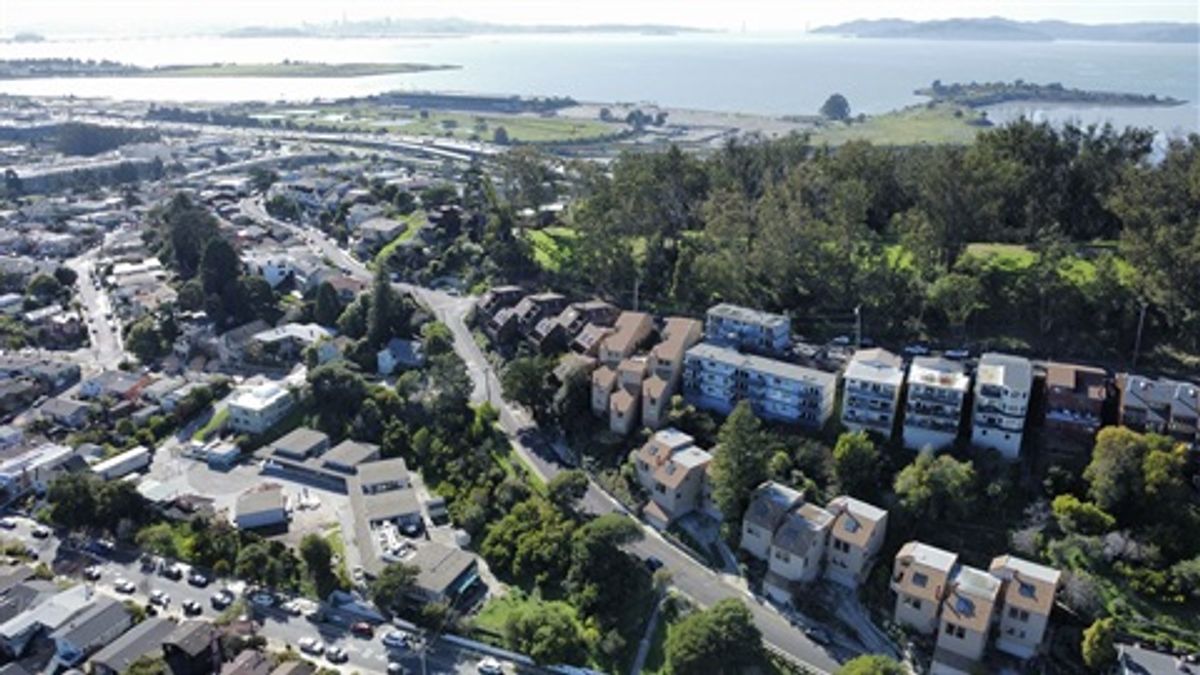
Albany closed early 2026 with a $1.6M median sale price (Redfin) — up 15.5% year-over-year — with homes selling in roughly 12 days on average, pulling 7 offers per home, and clearing about 18% above list price. That's not a cooling market. That's the most competitive Albany has been in three years, and it sits in a city of just 1.7 square miles wedged between Berkeley to the south and El Cerrito to the north.
The Albany story for 2026 is structural. The city is one of the smallest incorporated municipalities in the East Bay (~20,000 residents). It has its own independent school district — Albany Unified — ranked in the top 5% of California by tested math and reading proficiency (GreatSchools, U.S. News). And it sits one BART stop north of Berkeley with direct access to Solano Avenue's restaurant-and-shop spine. That combination produces a market where buyer demand routinely outruns available inventory, and where 7-offer bidding wars on a 12-day clock are the norm rather than the exception.
This is the Albany housing market for 2026: real numbers, neighborhood-level pricing, the school-district math that drives the premium, and the commission cost-of-sale that matters when 18% above-list sale prices are pushing transaction values toward $1.9M and beyond.
Albany Market Snapshot — Early 2026
| Metric | Albany (94706) | Year-Over-Year |
|---|---|---|
| Median sale price (Redfin) | $1,600,000 | +15.5% |
| Days on market (median) | 12 | Faster than Bay Area average |
| Average offers per home | 7 | Among highest in East Bay |
| Sale-to-list premium | ~18% above list | Most competitive tier |
| School district | Albany Unified (independent) | Top 5% in California |
| City footprint | ~1.7 sq mi | Severe supply constraint |
Sources: Redfin Albany housing market, GreatSchools Albany, and U.S. News Albany High School. Data reflects early 2026 reporting.
The headline: Albany is one of the East Bay's most competitive single-family markets in 2026. The +15.5% YoY appreciation comes against the backdrop of cooling neighbors (El Cerrito is down 4.3%, parts of Oakland are flat) — meaning Albany's premium is widening, not compressing, even as broader Bay Area conditions soften.
Albany Neighborhoods and Their Sub-Markets
Albany is small enough (1.7 square miles, ~20,000 residents) that the entire city sits inside a single ZIP code, 94706. But buyers and appraisers absolutely sub-segment, and the differentiators move price meaningfully:
Albany Hill — The west side of Albany Hill commands sweeping views of the Golden Gate Bridge, Mount Tamalpais, and San Francisco. View-corner lots here are the top tier of the Albany market and routinely transact in the $1.8M to $2.5M+ range. Lot orientation matters more than square footage — south-facing or southwest-facing view sites carry meaningful premium over east-facing or interior lots. (Berkeley Homes neighborhood profile covers Albany Hill in detail.)
Solano Avenue corridor — Albany's commercial spine and the city's identity. Walk-to-Solano blocks (between Marin Avenue and the Berkeley border) command consistent premiums for proximity to coffee, dining, the Solano Stroll, and pedestrian access to Solano Avenue itself. Mid-century craftsman homes and bungalows dominate, typically transacting in the $1.4M to $1.9M band depending on condition and lot.
Albany Terrace — Among the most popular neighborhoods in the city, with the highest density of single-family inventory and one of the safer crime profiles in Albany. Sale prices here cluster around the citywide median ($1.5M-$1.7M).
Solano Hill — Hillside neighborhood with view potential and slightly larger lots than the flatlands. A mix of mid-century and newer construction. Buyer demand here is consistent — Solano Hill and Albany Terrace are typically the two highest-volume neighborhoods month-to-month, per Redfin neighborhood data.
Dartmouth and Garfield (south of Marin Avenue) — Walkable to Berkeley, popular with UC Berkeley faculty and grad-student-family buyers. Smaller homes on tighter lots than the Solano-corridor blocks, but the Berkeley-adjacency and Albany Unified School District combo drives bidder demand that's harder to find elsewhere in the East Bay at the same price point.
The price discipline buyers and appraisers apply: Albany is small enough that "neighborhood comp" really means "block-by-block comp." A south-facing Albany Hill view lot is not in the same comp set as a similar-square-foot Solano Avenue corridor home, even though both are in the same city.
The Albany Unified School District Premium
Albany's housing premium is structurally tied to Albany Unified School District (AUSD). The district operates 5 schools serving the entire 1.7-square-mile city — Marin, Cornell, and Ocean View elementaries, Albany Middle, and Albany High School. Per GreatSchools, AUSD ranks in the top 5% of California's 1,908 school districts on combined math and reading proficiency. Albany High School posts a 95% graduation rate and ranks 76th in California statewide (U.S. News).
For buyer households with school-age children — a significant share of the Albany buyer pool — AUSD access is a primary purchase motivator. They're not flexible on school district. They're either Albany buyers, or they're shopping Berkeley (BUSD), Piedmont, or Lafayette/Orinda — all of which are categorically more expensive starting points.
The math: comparing similar architecture and lot sizes immediately across the Albany/Berkeley line vs. across the Albany/El Cerrito line, the AUSD premium is consistently in the $200K to $400K range per home. That's not a soft brand premium — that's the price buyers pay for K-12 access to one of the East Bay's highest-rated public school districts.
The bidding-war dynamic this creates: most Albany buyers are not flexible on school district. When inventory is tight (and Albany inventory is structurally tight — see below), the AUSD-locked buyers compete only with each other, which is exactly what produces the 7-offer average and 12-day median DOM.
Why Albany Sells in 12 Days: The Inventory Math
Albany rarely has more than 15-25 active single-family listings at any time. Compared to Berkeley (hundreds of active listings citywide) or even neighboring El Cerrito (where El Cerrito Hills alone often shows more active listings than all of Albany combined), that's a structural supply constraint. The 1.7-square-mile geography caps total housing units below ~7,500, turnover is below the regional average, and Albany households tend to stay put once they buy in for the schools.
This is what produces the 12-day median DOM: when an Albany home priced correctly hits the market, the school-district-locked buyer pool that's been waiting weeks (sometimes months) for a fit competes immediately. Pricing strategy in Albany is therefore more about list-price discipline than about "marketing the home" — well-priced homes pull 7+ offers in the first weekend of showings, and the 18% above-list sale premium is the average outcome of that bidding dynamic.
The corollary: over-priced Albany listings get punished. The same buyer pool that bid 7 offers at fair pricing simply doesn't engage at $200K above-market. Albany sellers who try to "test the market" with aggressive pricing often see longer DOM, then a price reduction, then a sale below where a fairly-priced opener would have closed.
Commission Math at Albany 2026 Sale Prices
The faster Albany sells — and the higher the above-list sale premium runs — the louder the commission question gets. At an effective sale price near $1.89M (the $1.6M median × the 18% above-list premium), here's what 2.5% means in dollar terms:
| Sale Price | Traditional 5% | Traditional 6% | Charlie AI | White Glove | You Keep vs 6% (Charlie AI) |
|---|---|---|---|---|---|
| $1,400,000 (entry-corridor) | $70,000 | $84,000 | $7,999 | $20,000 | +$76,001 |
| $1,600,000 (median) | $80,000 | $96,000 | $7,999 | $23,000 | +$88,001 |
| $1,890,000 (typical Albany sale w/ 18% premium) | $94,500 | $113,400 | $7,999 | $28,000 | +$105,401 |
| $2,200,000 (Albany Hill view) | $110,000 | $132,000 | $12,999 | $32,000 | +$119,001 |
Numbers reflect listing-side compensation only. Buyer-agent compensation is separate and negotiable post the August 2024 NAR settlement. LOQOL's flat fee covers the listing-side workload — MLS placement, marketing, contract negotiation, and closing coordination — for $4,399, regardless of whether the home sells for $1.4M or $2.2M. See LOQOL pricing and the savings calculator.
The Albany question isn't whether your listing agent earned $4,399 of work. The question is whether they earned an additional $30,000 to $50,000 of work beyond what a flat-fee listing covers — particularly when the home goes pending in 12 days with 7 offers in hand.
Selling in Albany in 2026: The Playbook
Five things that move an Albany sale price by enough to matter:
- Lead the listing with AUSD. Albany Unified is the city's primary demand driver. Listing copy, neighborhood pages, and open-house collateral should foreground school access, attendance boundaries, and AUSD test-score rankings — not bury them in fine print at the bottom.
- Price in for the 18% above-list dynamic. Albany's market is genuinely competitive. Pricing slightly under the comp range (rather than at-or-above) is what triggers multi-offer dynamics; pricing aspirationally above the comp range tends to suppress bidder participation and lengthen DOM.
- Photograph view sightlines on Albany Hill listings. West-facing view homes carry premium specifically for the view — interior-only photo sets undersell the lot. Drone exterior coverage and golden-hour view shots are table stakes on Albany Hill at $1.9M+.
- Time the listing to school calendar. Albany buyer households with K-12 kids are sharply seasonal. Late-winter and spring listings (February through May) systematically pull stronger AUSD-driven demand than summer or holiday-season listings.
- Negotiate buyer-agent compensation explicitly. Post the NAR settlement (August 2024), buyer-side commissions are negotiable and disclosed separately. Albany sellers can — and should — actively negotiate this number rather than default to the historical 2.5%.
Best Real Estate Agents in Albany (2026)
For sellers who want a full-service traditional agent, the top names with documented Albany track records include agents at Compass (the brokerage with ~133 agents serving Albany per Compass's local roster), Coldwell Banker Realty, Red Oak Realty, and Keller Williams Realty. For full coverage of the Albany agent landscape — brokerage-by-brokerage market share, agent specialties, and head-to-head commission math — see rankings from HomeLight Albany and U.S. News Albany.
How LOQOL Lists in Albany
LOQOL is a California-licensed flat-fee listing brokerage (CA DRE #02261474). For Albany sellers, the listing service includes professional photography, MLS placement, full BAREIS/MLSListings syndication, contract review and negotiation, and closing coordination — for a flat fee of $4,399, regardless of sale price.
Behind the service: Charlie, LOQOL's AI agent, handles inquiry triage, comp analysis, listing-copy first drafts, and follow-up cadence — which is what lets the human listing operator spend marginal time on the negotiation, not the inbox. AI is the how; the listing-side outcomes are the same scope of work a 2.5% commission agent provides.
The math: at the $1.6M Albany median, the listing-side commission savings are roughly $35,600 vs. a 2.5% traditional listing — money that stays with the seller rather than the brokerage. At Albany Hill view-home prices, savings clear $50,000.
See LOQOL's Albany savings math | Sell without commission
Albany Housing Market FAQ
Q: What is the median home price in Albany, CA in 2026?
A: The median sale price was approximately $1.6M in early 2026, up 15.5% year-over-year per Redfin. Single-family detached homes drive that figure; mixed property-type averages from sources like Zillow are lower because they include condos and townhomes.
Q: How fast do Albany homes sell?
A: Roughly 12 days median DOM, with 7 offers per home on average and homes selling about 18% above list price. Albany is among the most competitive markets in the East Bay in 2026.
Q: Why is Albany so much more expensive than El Cerrito or parts of Berkeley?
A: Two structural reasons. First, Albany has its own school district — Albany Unified — which ranks in the top 5% of California by tested proficiency. Second, the entire city is 1.7 square miles, capping housing supply below ~7,500 units. The combined effect is a $200K-$400K premium per home vs. comparable cross-border alternatives.
Q: What's the Albany Unified School District premium?
A: Comparing similar architecture and lot sizes across the Albany/Berkeley and Albany/El Cerrito borders, the AUSD premium typically runs $200K to $400K per home — directly attributable to school-district access.
Q: Are Albany home prices going up or down in 2026?
A: Up significantly. Per Redfin, Albany prices are up 15.5% year-over-year in early 2026 — among the strongest YoY gains in the East Bay, and notable given that some neighbors (El Cerrito, parts of Oakland) have softened or declined over the same period.
Q: How much does it cost to sell a home in Albany?
A: At the $1.6M median, a 2.5% listing-side commission alone is $40,000. LOQOL's flat fee is $4,399 for the same listing-side scope of work — a savings of roughly $35,600 on the median Albany sale, climbing to $50,000+ on Albany Hill view homes.
Q: When is the best time to list a home in Albany?
A: Late winter through spring (February-May) systematically pulls the strongest school-district-driven buyer demand. Buyer households with K-12 children typically want to close before summer to time the move with the AUSD calendar.
Related Albany and East Bay Coverage
- Berkeley Housing Market 2026
- Oakland Housing Market 2026
- Lafayette Housing Market 2026
- LOQOL Pricing | Savings Calculator | Sell Without Commission
Want more clarity like this?
Clear, actionable guidance on selling and buying — straight to your inbox.