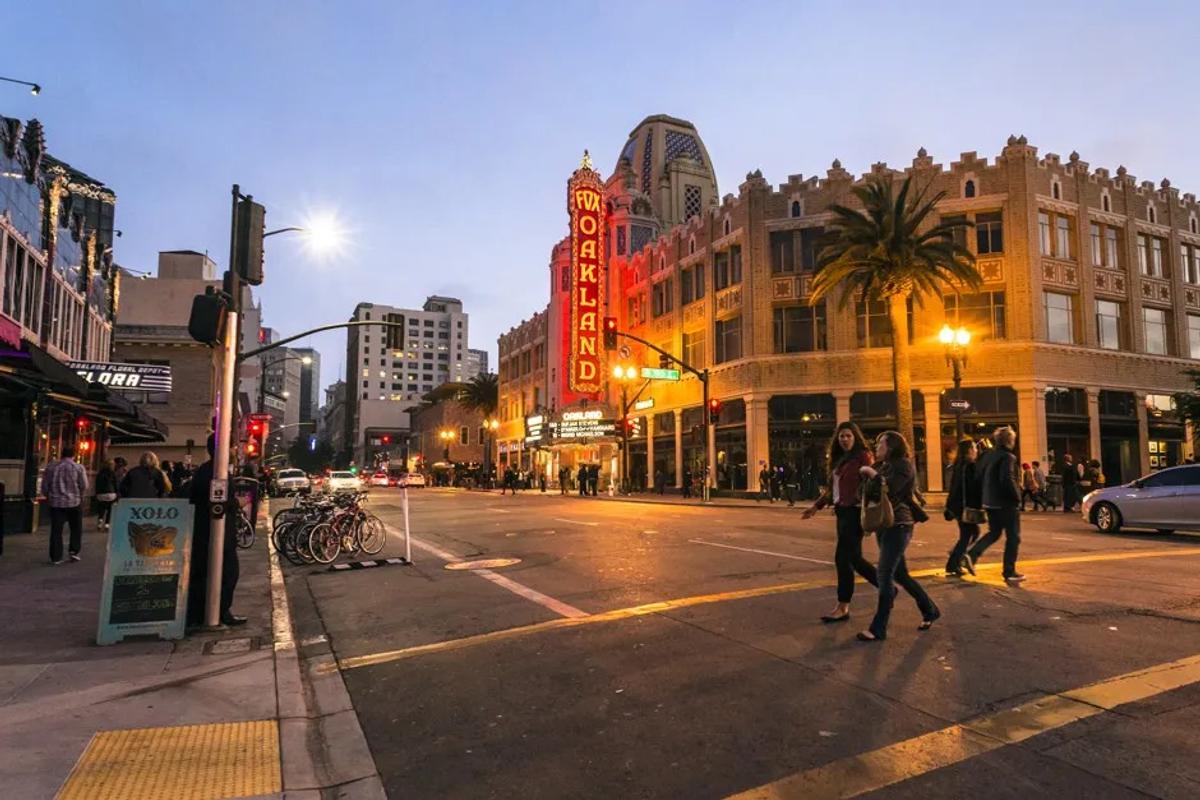
Oakland Housing Market 2026: A Tale of Two Cities Where Rockridge Soars 37% and Flat Neighborhoods Stall
Oakland's housing market in 2026 is a study in contradictions. While Rockridge climbs toward $2.2 million median prices—up 37.1% year-over-year—neighborhoods just miles away in East and West Oakland are declining. This isn't the homogeneous market of five years ago. It's a bifurcated landscape where geography, transit access, gentrification, and a seismic employer shift (Kaiser's downtown departure) are rewriting neighborhood futures.
For sellers navigating this volatile terrain, understanding which neighborhoods are in ascent versus decline isn't academic. It's the difference between a swift sale at list price and months on market. And it's why pricing strategy—powered by data instead of hunches—has never mattered more. This is where LOQOL's AI agent, Charlie, steps in: providing real-time neighborhood intelligence and AI-powered pricing so sellers capture market momentum while it lasts.
Let's dig into what's really happening in Oakland's 2026 market.
The Oakland Market at a Glance: Modest Growth Masks Deep Fragmentation
Overall Market Snapshot:
- Median home price: $735,000–$740,000 (Redfin, February 2026), +0.4% year-over-year
- Average home value: $802,361 (Zillow)
- Price per square foot: $531, down 0.47% year-over-year
- Sale-to-list ratio: 105.32%–109.1% (homes selling above asking in a majority of cases)
- 48.62% of homes selling above asking price
- Days on market (DOM): 18–19 days average
- Inventory: 264–355 active listings, representing just 0.88–0.92 months of supply (critically low)
- New listings down 35% year-over-year (January 2026)
On the surface, Oakland's 0.4% year-over-year appreciation looks tepid. But this aggregate figure hides a tale of two cities.
The Two Cities: Hills Boom, Flats Stall
Oakland's affluent hills neighborhoods are experiencing a boom. Rockridge, Montclair, and the neighborhood around Piedmont Avenue are seeing double-digit appreciation, rapid sales, and buyer competition. This is where BART walkability, restaurant-district vitality, and proximity to UC Berkeley converge.
Meanwhile, East Oakland and parts of West Oakland are treading water or declining. Fruitvale is down 16.5% year-over-year. Adams Point has dropped 24.6%. These neighborhoods—historically home to working-class and communities of color—are caught between gentrification pressures and structural economic challenges as Kaiser Permanente relocates.
This divergence isn't accidental. It's the outcome of decades of zoning policy, infrastructure investment, and demographic change.
The Neighborhood Breakdown: Where to Buy, Where to Sell
The Winners: Rockridge, Montclair, and the BART Corridor
Rockridge: $2.2M Median, +37.1% YoY, 13 Days on Market
Rockridge is Oakland's crown jewel in 2026. The neighborhood sits atop the Oakland hills, commands walkable access to the Rockridge BART station, and hosts some of the East Bay's most coveted independent retailers and restaurants. College Avenue—Rockridge's main corridor—is a masterclass in urban village design: narrow sidewalks, locally owned bookstores, cafes, wine shops, and restaurants that draw both neighborhood residents and weekend visitors from across the Bay Area.
The neighborhood's appeal is compounded by its stock of 1920s–1950s Craftsman and Spanish Colonial Revival homes—architectural styles that command premiums in today's market. A well-maintained 1930s Craftsman with original details on a quiet tree-lined street sells faster and for more than a comparable flat-pack new construction would in a hot tech market.
Median price of $2.2 million reflects the neighborhood's scarcity (limited new construction) and its desirability. The 37.1% year-over-year appreciation is partly appreciation, partly pent-up demand from 2025 that's spilling into 2026. The 13-day average DOM signals that homes here are moving in weeks, not months.
For sellers in Rockridge: This is your moment. The market is hot. Pricing conservatively at 95% of comparable sales will draw multiple offers and competitive bidding. AI-powered pricing analysis (like Charlie provides) becomes essential—overpricing even by 3% can price you out of the market entirely.
Montclair: $1.6M Median, +28.5% YoY, 16 Days on Market
Montclair, perched higher than Rockridge on the Oakland hills, offers even more dramatic views and a quieter, more residential feel. The neighborhood is home to the Montclair Village shopping district, which has gentrified considerably over the past decade and now hosts a Whole Foods, local restaurants, and boutique shops.
The 28.5% year-over-year appreciation (still explosive, though slightly behind Rockridge) reflects Montclair's appeal to families seeking space, views, and a more car-dependent but quieter lifestyle compared to the walkable urban-village feel of Rockridge. Homes here are generally larger (3–4 bedrooms, 2–3 baths), and buyers are often families or buyers from San Francisco paying partial cash to escape Bay Area over-leverage.
Temescal: $1.1M Median
Temescal—centered around Telegraph Avenue and the Temescal Alley pedestrian corridor—is Oakland's arts and culture heartland. Vintage shops, breweries, live music venues, and the Temescal Arts Center draw a younger, creative demographic. The neighborhood is less expensive than Rockridge or Montclair but is gentrifying rapidly.
The $1.1M median is roughly 2.5x lower than Rockridge. This is the neighborhood where cash-constrained professionals (teachers, non-profit workers, early-career tech) can still buy a home in walkable Oakland for under $1.2M.
The Struggles: East Oakland and West Oakland
Adams Point: $450K Median, -24.6% YoY
Adams Point, centered on Lake Merritt, should be one of Oakland's most desirable neighborhoods. Lake Merritt itself is a gem—a 155-acre lake with a 3.1-mile jogging path, parks, and a recreational marina. Yet Adams Point is down 24.6% year-over-year, reflecting a complex mix of: property crime concerns, COVID-era remote work deflating demand, and ongoing gentrification tensions.
The -24.6% decline is sharp. Homes that might have sold for $625K in spring 2025 are now fetching closer to $450K. For sellers, this is painful. For buyers, this is an opportunity—lakefront property in an urban center at these prices doesn't last long.
Fruitvale: $545K Median, -16.5% YoY
Fruitvale, centered on International Boulevard, is a historically Latino working-class neighborhood that's become a focal point of Oakland gentrification debates. Gentrification pressures have intensified: the white population has grown from 18% to 38% over two decades, while the Black population has declined from 40% to 23%. 93% of low-income neighborhoods in Oakland are at risk of gentrification.
The -16.5% year-over-year decline in median price likely reflects supply-side pressures (landlords cashing out as investment properties come available) combined with affordability constraints that are pushing lower-income residents out of Oakland entirely toward more affordable jurisdictions in the Tri-Valley or Central Valley.
West Oakland: ~71 Days on Market, 2% Below List Average
West Oakland—historically a maritime and working-class neighborhood—is experiencing the longest hold times in the city. The 71-day average DOM is nearly 4x longer than Rockridge. Homes are selling 2% below list, signaling weak buyer demand.
This is the Oakland that Kaiser's departure is reshaping. Kaiser Permanente, with 11,000+ employees, was headquartered in West Oakland. But in 2026, Kaiser reduced its Oakland lease footprint from 366,000 square feet to 236,000 square feet—a 35% reduction representing roughly 5,000 jobs leaving the neighborhood.
For West Oakland sellers, this is a headwind. But it's also opportunity: redevelopment projects are in motion.
The Kaiser Permanente Shift: How Oakland's Biggest Employer Exodus Reshapes the Market
Kaiser Permanente wasn't just any employer. For decades, it was Oakland's anchor tenant—11,000+ employees working in medical administration, regional management, and support functions. The company's headquarters were the city's heartbeat.
The 2025–2026 contraction—reducing Oakland lease space by 130,000 square feet—signals a broader trend: large employers are consolidating remote-work policies and consolidating footprint. Some Kaiser jobs are moving to other Bay Area Kaiser facilities (San Jose, Walnut Creek). Others are moving to lower-cost regions.
The impact on Oakland real estate:
- West Oakland property values. Fewer office workers means less demand for walkable urban housing proximate to Kaiser HQ. This explains the weak sales in West Oakland and the long DOM.
- Downtown Oakland. The blocks immediately south of Lake Merritt—traditionally anchored by Kaiser employees—are seeing softening demand for new construction condos.
- Rental market. Fewer Kaiser workers means fewer renters. Oakland's median rent has declined $180 year-over-year to $2,245/month, suggesting surplus rental inventory.
But: Opportunity in Gentrification. As Kaiser space vacates, the city is fast-tracking redevelopment. Mandela Station in West Oakland—a mixed-use development anchored by the former West Oakland BART parking lot—is breaking ground in 2026 with 762 new units, 300,000 square feet of office space, and 53,000 square feet of retail. Brooklyn Basin Parcel H is adding 83 townhouse apartments under construction. Lake Merritt BART Senior Housing, a 97-unit affordable housing project, is nearing completion. Six additional housing projects received Measure W county funding in March 2026.
West Oakland's medium-term future is redevelopment and gentrification, even if near-term demand is softening.
The Tech Counterweight: Oakland's 268 Startup Ecosystem
While Kaiser's departure is material, Oakland isn't losing economic anchor—it's gaining a different kind: the tech startup ecosystem.
Oakland is home to 268 tech startups headquartered in the city. This is a different demographic from Kaiser's administration workforce.
Notable tech employers:
- Block (formerly Square): $100B+ market cap, with thousands of employees in Oakland and San Francisco
- Fivetran: $853M+ raised, headquartered in Oakland, data integration platform
- LaunchDarkly: feature management platform, substantial Oakland presence
- Everlaw: legal AI platform, Oakland-based
- AI and fintech combined: Oakland has attracted $1.2B+ in venture capital for AI and fintech startups over the past 3 years.
Average tech salary in Oakland: $121,642/year. This is lower than San Francisco's average of $145,000+, but higher than the Bay Area median, and it's enough to support a homebuying demographic.
The tech workforce is younger, more mobile, and less likely to need 4-bedroom houses. They're interested in walkable neighborhoods (Rockridge, Temescal, Downtown) with good food, culture, and BART access. This is why Temescal and Rockridge are appreciating while Adams Point is declining—tech workers are self-segregating toward neighborhoods with culture and walkability.
The Port of Oakland: A $174B Economic Anchor
Oakland's true economic backbone is the Port of Oakland. The port supports 98,000+ regional jobs and generates $174 billion in annual economic activity.
The Port doesn't directly employ all 98,000 people, but it anchors a logistics, trucking, warehousing, and international trade ecosystem that's distributed across the broader East Bay. Port workers live in Oakland, Hayward, Union City, and beyond. They tend to buy in neighborhoods with good freeway access (East Oakland, West Oakland, areas near I-880) rather than walkable urban villages.
Port employment is stable and unlikely to leave. But it's also relatively low-wage work, which means port-adjacent neighborhoods have struggled with affordability and property crime—two factors weighing on East and West Oakland valuations.
Gentrification and the Displacement Crisis
Oakland's housing market can't be understood without discussing gentrification and displacement.
Over two decades, Oakland's white population has grown from 18% to 38%, while the Black population has declined from 40% to 23%. This isn't an abstract statistic—it represents thousands of families priced out of neighborhoods where they've lived for generations.
93% of low-income neighborhoods in Oakland are at risk of gentrification. The mechanisms are familiar: property values rise, landlords cash out, new owners renovate and raise rents, older tenants can't afford the increases, and entire communities disappear.
This is happening right now in Fruitvale, Adams Point, and parts of West Oakland. Young professionals priced out of San Francisco are buying property—often as investment vehicles—in these neighborhoods, driving appreciation that displaces long-term residents.
The 2026 Oakland market is, at its core, a story of San Francisco overflow. Oakland rents are roughly 47% cheaper than San Francisco. A one-bedroom in San Francisco rents for ~$3,150/month; in Oakland, ~$1,850/month. This differential is fueling migration and investment.
For Oakland's Black and Latino residents, this is a crisis. For real estate investors and sellers in appreciating neighborhoods, it's opportunity. The tension between these two realities defines Oakland's market in 2026.
Oakland vs. San Francisco: The 50% Price Gap
One number dominates Oakland's market psychology: Oakland homes cost roughly 50% of equivalent San Francisco homes.
A Rockridge Craftsman selling for $2.2M would fetch $4M+ in San Francisco's equivalent neighborhoods (Pacific Heights, Presidio Heights). A Temescal condo at $1.1M would be $2M+ in SF's Mission or Hayes Valley.
This gap is a permanent feature of the Bay Area market, driven by geography (San Francisco's land scarcity), employment concentration, brand prestige, and historical pricing. But it's also a floor—below which Oakland can't fall—because any smaller price gap would trigger massive San Francisco exodus to Oakland.
The gap explains why Rockridge is up 37% while West Oakland is flat. It's why tech workers are moving to Temescal. And it's why savvy investors are buying in Adams Point at $450K, betting that a 15% appreciation over 3 years is more likely than continued decline.
Neighborhood Conditions and Price Forecasts
Neighborhood Profiles: A Seller's Guide
Rockridge, Montclair, Piedmont Avenue: High confidence 2026–2027 price stability or modest appreciation. These are supply-constrained, demand-driven neighborhoods with structural tailwinds (walkability, school quality, cultural amenities). A seller in Rockridge should list with confidence.
Temescal, Grand Lake: Moderate appreciation likely. These neighborhoods are gentrifying but still retain cultural identity. Arts, music, breweries, and independent retail create stickiness. Temescal could see 8–12% appreciation over 18 months.
Adams Point, Lakefront: Risk of continued decline in near-term (6–12 months), followed by stabilization as West Oakland redevelopment spills eastward. Lakefront property will eventually appreciate—this is prime urban real estate—but the path there is volatile.
Fruitvale, International Boulevard: Highest gentrification risk. Property values could appreciate 15–20% over 2–3 years, but displacement risk is acute. For sellers, this is an opportunity window. For long-term residents, it's a crisis.
West Oakland: Near-term weakness (Kaiser departure), long-term strength (redevelopment). A home listing in West Oakland in April 2026 may sit for 60+ days. But that same home in April 2028, after Mandela Station and Brooklyn Basin fill with 800+ new residents, could appreciate 20%+ off 2026 lows.
East Oakland: Dependent on specific location. Neighborhoods with freeway proximity (near I-880, I-580) and warehousing/logistics employment will remain stable. Neighborhoods with crime and school quality issues will stagnate.
Condo vs. Single-Family: A Bifurcated Market
Oakland's market is also divided by housing type.
Single-family homes: Median $750,000. Buyers are families and professionals seeking space. Sales are brisk in walkable neighborhoods (Rockridge, Montclair), slow in car-dependent areas (East Oakland).
Condos: Median $480,000–$500,000. Buyers are younger, more transient, often tech workers or renters-turned-owners. Condos are concentrated in Downtown Oakland, Lake Merritt, and Jack London Square. The condo market has been soft since 2020—these properties suffered outsized COVID-era depreciation and have only partially recovered.
For sellers: If you're selling a condo in Lake Merritt or Downtown, expect to price competitively. Condos face structural headwinds (HOA fees, perceived transience) and will never command the appreciation multiples of single-family homes. But they're liquid, and a well-priced condo will sell.
How Sellers Can Capture Market Momentum: Pricing and Technology
Oakland's 2026 market rewards sellers who price accurately and list quickly. The scarcity of inventory (0.88–0.92 months supply) means a well-priced home sells in weeks. An overpriced home sits for months, and every month reduces buyer interest.
Why AI-Powered Pricing Matters
Traditional real estate agents use comparable sales analysis—"comps"—to suggest pricing. But comps are historical. They don't capture real-time market momentum, neighborhood-specific velocity, or buyer intent. A home in Rockridge that's "worth" $2.1M according to March 2026 comps might be worth $2.2M in April 2026 because buyers are rushing into the neighborhood.
LOQOL's AI agent, Charlie, analyzes:
- Real-time MLS data across Oakland neighborhoods
- Sale velocity and days-on-market trends
- Buyer demand signals (number of showings, offer volume)
- Comparable sales, adjusted for condition, size, and neighborhood micro-trends
The result: pricing that's accurate to within 2–3% of true market value. In a $2M sale, that's a $40,000–$60,000 difference.
Flat-Fee Commission vs. Traditional 2.5%
Oakland's median home price of $735K means a traditional 2.5% commission runs $18,375. For a $2.2M Rockridge home, that's $55,000. For a $1.6M Montclair home, that's $40,000.
LOQOL offers flat-fee commission structures, meaning sellers keep the difference between traditional commission and the flat fee. On a $2M sale, this can mean $20,000–$30,000 in seller savings.
These savings are real money. On a Rockridge home, that's a down payment for a rental property. On a Temescal condo, that's 6 months of property taxes.
The trade-off is minimal. LOQOL handles:
- AI-powered pricing analysis
- Professional photography
- MLS listing and syndication
- 24/7 buyer communication via Charlie AI
- Negotiation and transaction management
All the mechanics of a traditional agent, without the overhead of a 2.5% commission.
FAQ: Oakland Housing Market 2026
Q: Is now a good time to sell in Oakland?
A: Yes, if you're in an appreciating neighborhood (Rockridge, Montclair, Temescal). Inventory is critically low (0.88–0.92 months of supply), meaning competition is minimal. List at 95% of comps and expect multiple offers. If you're in a declining neighborhood (Adams Point, Fruitvale, West Oakland), the timing is riskier. The long DOM in these areas suggests patient buyers, not bidding wars. Consider pricing to move (85–90% of comps) and get liquid.
Q: Will Oakland prices keep appreciating?
A: Likely, but with extreme neighborhood variance. Rockridge and Montclair have structural appreciation drivers (scarcity, walkability, cultural amenities). Expect 8–15% appreciation over 3 years. West Oakland has medium-term appreciation potential (redevelopment), but near-term weakness. Expect stability or slight depreciation through 2026–2027, then recovery. East Oakland and Adams Point depend on individual micro-location, crime rates, and school quality.
Q: Why is Oakland so much cheaper than San Francisco?
A: Geographic and historical factors. San Francisco has 47 square miles of land and is supply-constrained by water and development. Oakland has more land and lower demand. Psychologically, San Francisco has brand prestige; Oakland is still seen as secondary. But this gap is stable—unlikely to close or widen substantially.
Q: Should I buy a condo or single-family home?
A: Single-family homes appreciate faster and are preferred by long-term owners. Condos are cheaper and more liquid, preferred by investors and young professionals. If you plan to own 5+ years, buy single-family in an appreciating neighborhood. If you're building equity before moving, a condo is fine, but price conservatively.
Q: What's happening with Kaiser's departure?
A: Kaiser is reducing Oakland footprint by 35% (130,000 square feet), likely relocating jobs to San Jose and other Bay Area facilities. This is near-term headwind for West Oakland property values and rental demand. But it's also opportunity: the city is fast-tracking redevelopment (Mandela Station, Brooklyn Basin, affordable housing projects) to fill the employment gap. Long-term, West Oakland will gentrify, not stagnate.
Q: How much can I save on commission with LOQOL?
A: Depends on home price. On a $735K home (Oakland median), traditional 2.5% is $18,375. LOQOL's flat-fee model saves $15,000–$25,000 depending on home price and transaction complexity. Use our savings calculator to estimate your specific savings.
The Bottom Line: Timing, Neighborhoods, and Technology
Oakland's 2026 market is simultaneously hot and stalled, appreciating and declining, gentrifying and struggling. It's a tale of two cities.
For sellers in Rockridge, Montclair, or other appreciating neighborhoods: Now is the time. List with confidence, price to 95% of comps, and expect rapid sale. Use AI-powered pricing to capture last dollar. Consider flat-fee commission structures to keep savings in your pocket.
For sellers in West Oakland, Adams Point, or other challenged neighborhoods: Recognize headwinds, but don't panic. Price to move (85–90% of comps) to avoid extended DOM. Plan to hold 3+ years if possible—mean reversion and redevelopment will likely drive recovery. Consult with an agent (or Charlie AI) who understands neighborhood-specific dynamics.
For all Oakland sellers: Use technology. Real-time pricing, buyer intent signals, and market velocity data aren't luxuries—they're competitive advantages. An overpriced home loses weeks or months of potential buyer interest. An accurately priced home with professional photos and AI-powered buyer communication moves in 18–20 days.
Oakland's 2026 market rewards precision, timing, and neighborhood knowledge. Charlie AI and LOQOL's flat-fee model provide the precision and technology. You provide the timing—by listing in a moment when inventory is scarce and buyer demand is real.
| Metric | Traditional Agent (2.5%) | LOQOL Flat Fee |
|---|---|---|
| Commission on $735K home | $18,375 | Flat fee |
| Commission on $1.1M home | $27,500 | Flat fee |
| Commission on $2.2M home | $55,000 | Flat fee |
| MLS listing | ✓ | ✓ |
| Professional photos | ✓ | ✓ |
| AI-powered pricing | ✗ | ✓ |
| 24/7 buyer communication | Limited | ✓ (Charlie AI) |
Ready to Sell in Oakland? Here's What Comes Next
Step 1: Understand Your Neighborhood. Oakland's market is hyper-local. The neighborhood you're in determines pricing strategy, timeline, and expected DOM. Use LOQOL's market analysis (powered by Charlie) to understand your specific micro-market.
Step 2: Get an Accurate Price. Use LOQOL's AI pricing tool to see what your home is worth in real-time. Don't trust agent hunches or outdated comps. Pricing is the lever that moves sales.
Step 3: Calculate Your Savings. On a $2M Rockridge home, traditional commission is $50,000. LOQOL's flat-fee model saves you $15,000–$25,000. That's real money.
Step 4: List with Confidence. List with LOQOL, and your home goes live on MLS, Zillow, Redfin, and 100+ portals simultaneously. Charlie handles 24/7 buyer inquiries. You focus on preparing the home and life for transition.
Ready to start? Explore LOQOL's services and get a free pricing estimate.
We do not and will not discriminate on the basis of race, color, religion, sex, national origin, familial status, disability, sexual orientation, or gender identity in any of our practices, policies, or procedures. If you believe you have experienced housing discrimination, you may file a complaint with the U.S.
California Department of Real Estate License #02261474
Sources and Citations
- Redfin Oakland, CA Housing Market Data – February 2026
- Zillow Oakland, CA Home Prices and Data – 2026
- Kaiser Permanente Oakland Lease Reduction – San Francisco Business Journal, January 2025
- KALW: Oakland's Gentrification Crisis and the Loss of Black Oakland – KALW Public Radio, February 2023
- Apartment List: Oakland Rent Report – 2026
- Apartment List: San Francisco Rent Report – 2026
- Port of Oakland Economic Impact – Port of Oakland, 2026
- Mandela Station West Oakland Development – 2026
- Brooklyn Basin Development – 2026
- Lake Merritt BART Senior Housing – Oakland Housing Authority, 2026
- Block (formerly Square) Corporate Overview – 2026
- Fivetran Company Overview – 2026
- LaunchDarkly Company Overview – 2026
- Everlaw Legal AI Overview – 2026
- CB Insights: Oakland AI and Fintech Startups – 2024–2026
- Zillow: Condo Market Report – 2024–2025
- Crunchbase: Oakland Tech Startups – 2026
Explore More Bay Area Markets
Thinking about selling in Oakland or a nearby city? Compare market data and top agents across the Bay Area:
- Fremont: $1.5M median home prices | Best agents in Fremont
- Walnut Creek: $866K median home prices | Best agents in Walnut Creek
- San Francisco: $1.4M median home prices | Best agents in San Francisco
Selling across the Bay Area? See how flat-fee vs 6% commission actually works for California sellers.
Want more clarity like this?
Clear, actionable guidance on selling and buying — straight to your inbox.