The Campbell housing market in 2026 has a median sale price of about $1.9 million, up 19.6% year over year, with homes selling in roughly 21–29 days above list (Redfin). At that price a traditional 6% commission runs about $114,000 — versus LOQOL's flat $7,999 Charlie AI listing fee in the $1M–$2M tier.
Most Bay Area markets cooled in 2024 and 2025. Campbell went the other direction. As of January 2026, the median Campbell home sold for $1.9 million, up 19.6% year-over-year (Redfin). Sale-to-list ratio stayed above 100% — meaning buyers, in aggregate, are still paying more than asking — and homes cleared in roughly 21 to 29 days depending on the month.
In a South Bay landscape where San Jose has been flat and Mountain View has seesawed, Campbell is quietly running one of the cleanest seller's markets in the region. This post breaks down why, where inside Campbell the money is actually going, and what that $1.9M median costs a seller in commission.
Quick preview on that last point: the listing-side commission on a $1.9M Campbell sale, at a traditional 1% rate, is $19,000. LOQOL's flat fee is $4,399 — same MLS listing, same transaction coordination, same disclosure package, roughly $14,600 less at closing.
Campbell Market Snapshot (2026)
| Metric | Value | YoY Change |
|---|---|---|
| Median sale price | $1,900,000 | +19.6% |
| Average home price | ~$1,812,375 | Up |
| Median days on market | 21–29 days | Slightly up |
| Sale-to-list ratio | Above 100% | Still over list |
| LOQOL flat fee (listing side) | $4,399 | vs $19,000 at 1% |
Sources: Redfin — Campbell Housing Market, Zillow — Pruneyard / Campbell Home Values.
The Neighborhoods That Actually Set Campbell Prices
Campbell is a small city — just over 6 square miles and about 43,000 residents. But the price distribution inside those 6 miles is wide. Here's how the sub-markets stack up.
Pruneyard / Dry Creek
The pocket that sets the ceiling. Larger, traditional ranch-style homes on generous lots, walking distance to the Pruneyard Shopping Center (AMC Cinemas, Trader Joe's, the restaurant row). Homes here run $1.8M to $3M; a recent 4-bed traded at $2,670,000 (Pruneyard / Dry Creek comps, 2026). Buyers here are overwhelmingly tech-wage families trading up from starter homes in San Jose or Santa Clara.
Downtown Campbell
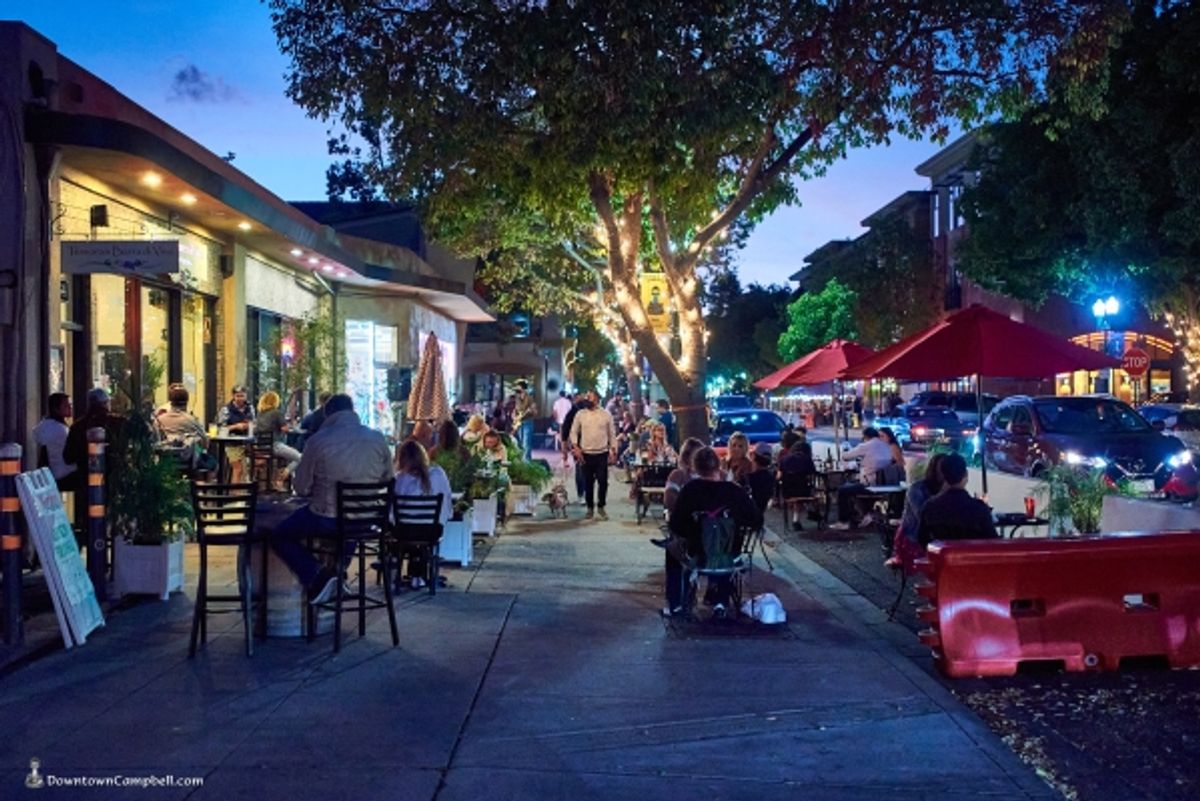
Walkable historic core — Campbell Avenue, the light rail station, the weekly farmers' market. Smaller lot sizes, older inventory, more condos and townhomes mixed in. Price range sits below Pruneyard but carries a lifestyle premium. This is the submarket buyers pay up for because they want to walk to dinner.
West Campbell / San Tomas
More single-family, some newer infill, access to Moreland School District (one of the key drivers of Campbell pricing). Steady demand; homes here consistently trade at or above list.
East Campbell / Winchester Corridor
Price-sensitive end of the Campbell market. More townhomes and entry-level single family. Works well for sellers pricing below $1.5M who want volume of buyer interest rather than luxury-tier positioning.
| Neighborhood | Typical Price Range | Buyer Profile |
|---|---|---|
| Pruneyard / Dry Creek | $1.8M–$3M | Tech-wage families, move-up |
| Downtown Campbell | $1.4M–$2.2M | Walkability buyers, empty nesters |
| West Campbell / San Tomas | $1.6M–$2.4M | School-district families |
| East Campbell / Winchester | $1.1M–$1.6M | First-time buyers, investors |
Why Campbell Is Outperforming Other South Bay Markets
Three reasons the median is up 19.6% while neighbors are flat.
School districts. Campbell Union High School District and Moreland Elementary consistently rate above the South Bay median. In a price band where $1.5M buys a house in a mid-tier district or $1.9M buys one in Moreland/Campbell Union, buyers with kids pay the $400K premium. It's the single biggest driver of Campbell's 2026 performance.
Downtown walkability. Campbell Avenue, the light rail connection, and the Pruneyard are lifestyle amenities that San Jose neighborhoods at the same price point don't have. This pulls buyers out of San Jose and into Campbell.
Limited inventory. Campbell is geographically constrained — 6 square miles, no meaningful undeveloped land, no major subdivisions in progress. New listings come almost entirely from turnover. Tight inventory + sustained demand = the 19.6% YoY number.
See the San Jose Housing Market 2026 for contrast — San Jose is flat to slightly up, while Campbell is up 19.6% in the same 12 months.
Employer Impact
Campbell isn't dominated by any single employer, which is actually a feature for sellers. Demand is diversified across:
- eBay (San Jose HQ adjacent) — Campbell is a 10-minute commute, heavily represented in local home purchases
- Netflix, Adobe, Roku — all within a 15-minute drive, all sending buyers into Campbell's mid-luxury segment
- Netflix Streaming Services employees — heavily concentrated in Campbell and Los Gatos
- Medical device / biotech corridor along Winchester Boulevard
- Good Samaritan Hospital — professional anchor driving mid-wage demand
When a single tech employer's RSUs take a hit, most Silicon Valley micro-markets feel it. Campbell's diversified demand base softens those shocks.
Pricing Strategy for a Campbell Listing in Q2 2026
If you're selling a Pruneyard/Dry Creek home at $2M+:
- Expect multiple offers if priced within 3% of the last comparable sale.
- Professional staging typically returns 2–4x its cost at this price point.
- 21–29 day market times are real — don't accept the first offer unless it's meaningfully over list.
If you're selling a Downtown Campbell home at $1.4M–$2.2M:
- Walkability premium is worth 5–8% above an equivalent-square-footage home on the west or east side.
- Marketing should foreground the downtown lifestyle — not just the property.
If you're selling in East Campbell under $1.5M:
- You'll see the deepest buyer pool — investor interest, first-time buyers, townhome traders.
- Price at or slightly below comps. This is the price band where 5% overpricing kills the listing.
Commission Math on a Campbell Sale
| Sale Price | Traditional 5% | Traditional 6% | Charlie AI | White Glove | You Keep vs 6% (Charlie AI) |
|---|---|---|---|---|---|
| $1,500,000 (East Campbell typical) | $75,000 | $90,000 | $7,999 | $22,000 | +$82,001 |
| $1,900,000 (city median) | $95,000 | $114,000 | $7,999 | $28,000 | +$106,001 |
| $2,700,000 (Pruneyard premium) | $135,000 | $162,000 | $12,999 | $39,000 | +$149,001 |
The numbers are striking because Campbell's prices are high. A seller at the Pruneyard/Dry Creek premium is writing a check close to $27,000 to a listing agent for roughly 30 days of work — when a flat-fee model handles the same work for $4,399.
Run your own numbers on the LOQOL savings calculator or see the full flat-fee process.
Charlie — LOQOL's AI agent — handles the operational load (scheduling, document flow, disclosure coordination, offer tracking) that normally consumes a traditional listing agent's hours. The human advisor is there for the judgment calls: pricing, negotiation, strategy.
Compared to Other South Bay Markets
For reference on how the rest of the South Bay is pricing:
- Saratoga Housing Market 2026 — $3.6M median, 9-day sales
- Los Gatos Housing Market 2026 — similar West Valley dynamics
- Sunnyvale Housing Market 2026 — $2.4M median, tighter inventory
Campbell sits in the sweet spot between those West Valley and Silicon Valley micro-markets — high-end enough to capture tech-wage demand, priced enough below Saratoga and Los Gatos to be a realistic move-up destination.
Frequently Asked Questions
Is Campbell a seller's market in 2026?
Yes. With median prices up 19.6% YoY, sale-to-list ratios above 100%, and 21–29 day pending times, Campbell is as clearly a seller's market as any city in the Bay Area. The only meaningful risk is overpricing — buyers are active but not infinite.
What's the median home price in Campbell CA?
$1.9 million as of January 2026, per Redfin. Average sale price is closer to $1.81M. Individual neighborhoods range from about $1.1M (East Campbell townhomes) to $3M (Pruneyard / Dry Creek homes).
Why are Campbell homes so expensive?
Three reasons: highly-rated school districts (Campbell Union High, Moreland Elementary), downtown walkability and lifestyle amenities (Pruneyard, Campbell Ave), and tightly constrained housing inventory in a 6-square-mile footprint. Add diversified tech-wage demand from eBay, Netflix, Adobe, and Roku nearby, and the price floor holds firm.
How long do Campbell homes take to sell?
Median pending time runs 21–29 days depending on the month. Single-family homes in Pruneyard/Dry Creek and Moreland school boundaries typically move faster (14–21 days). Homes priced 5%+ above recent comps can sit 45+ days.
How much commission do Campbell listing agents charge?
Listing-side commissions in Campbell typically run 1% to 2.5% of sale price, or $19,000 to $47,500 on a median $1.9M home. Buyer-side commissions are negotiated separately after the NAR settlement. LOQOL's $4,399 flat fee replaces the listing side — saving Campbell sellers an average of $14,000–$22,000 per transaction.
What's the best time of year to sell a home in Campbell?
April through June historically produces the highest sale-to-list ratios in Santa Clara County. Listing in late April captures peak South Bay buyer demand before the summer slowdown. August and December are the two weakest months; inventory cleared at the spring peak tends to trade at premium prices.
Will Campbell home prices continue rising in 2026?
The underlying drivers — school districts, downtown walkability, diversified employer base — don't change quickly. Most local forecasters expect 5–8% additional appreciation through year-end 2026, barring a broader recession or a sharp rate move. Listing in Q2 captures the strongest of that appreciation.
Want more clarity like this?
Clear, actionable guidance on selling and buying — straight to your inbox.