
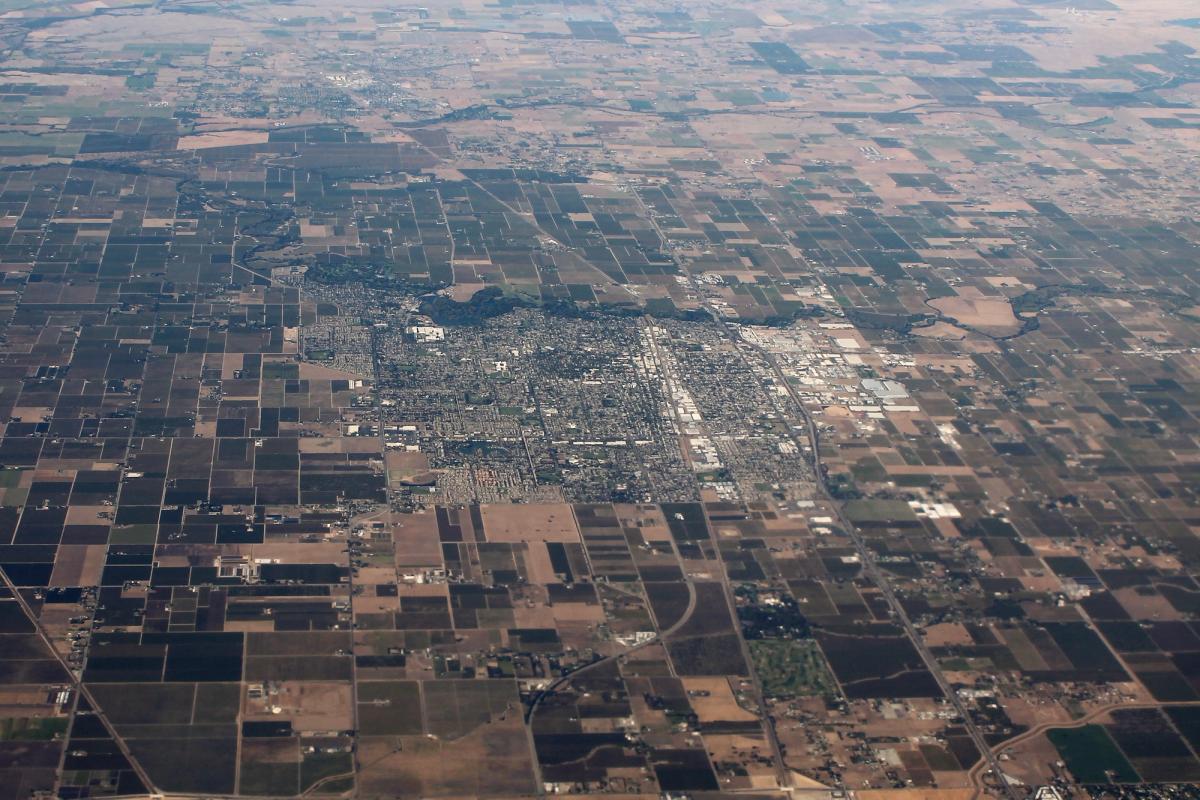
Lodi's median home sold for $490,000 in January 2026, down a striking 19% year-over-year, with a 44-day median days-on-market — per Redfin Lodi. That headline-level cool-down is the most dramatic single-year reset of any San Joaquin County city in our 2026 series — but the citywide median masks a quiet split. The Mokelumne River AVA tier — homes with vineyard adjacency or 0.25+ acre lots inside the city's largest sub-appellation — has held meaningfully better, with neighborhood-level medians clearing $570K and Wine Country acreage parcels (1+ acres, vineyard-rights-included) trading well above $700K.
This is the full 2026 Lodi housing market report: the Mokelumne River AVA premium, the Downtown / Hutchins Square / Woodbridge / Acampo / Victor submarket map, the Sacramento commuter dynamics that anchor northern-end demand, the Bay Area transplant overflow from Tracy and Manteca to the south, and what sellers at the citywide median actually keep when they swap a 6% traditional commission ($29,400) for a $4,399 LOQOL Charlie AI flat fee.
Lodi at a Glance — 2026 Headline Numbers
| Metric | Lodi (Jan 2026) | Year-Over-Year | Source |
|---|---|---|---|
| Median sale price | $490,000 | –19.0% | Redfin Lodi |
| Median days on market | 44 days | –38 days (was 82) | Redfin Lodi |
| Homes sold (Jan 2026) | 33 | –8% (was 36) | Redfin Lodi |
| Central Lodi median | ~$570,000 | Holding | Redfin Central Lodi |
| San Joaquin County median | $520,000 | +1.0% | Redfin San Joaquin County |
| Vineyard acreage parcels (1+ acre) | $700K–$1.2M | Thin liquidity | Mokelumne River AVA / MLS |
The $490K citywide median is the lowest of any San Joaquin County city in our 2026 series — Tracy clears $665K, Manteca $600K, Stockton sits around $470K. What's distinctive about Lodi is the YoY reset: an 82-day DOM dropping to 44 days is normally a sign of buyer return, but paired with a 19% price decline it's the unmistakable footprint of sellers giving up the 2024 ask. Inventory cleared faster because pricing reset down, not because demand picked up.
Why Lodi 2026 Is a Different Animal Than Tracy or Manteca
The standard 2026 narrative for the I-5 / 99 commuter belt — Tracy, Manteca, Stockton, Lathrop — is Bay Area transplant demand softening but median holding. Tracy at $665K is down only 1.1% YoY; Manteca at $600K is down 8.5% YoY. Lodi's –19% is a categorically different signal.
Three structural reasons:
1. Lodi is north of the commuter belt. Tracy and Mountain House anchor Altamont Pass commute demand into the Tri-Valley and South Bay. Manteca and Lathrop anchor Highway 580 / 205 commute demand into the East Bay. Lodi is on Highway 99 north of Stockton — its commute orientation is Sacramento, not the Bay Area. When Bay Area transplant demand softens, Tracy/Manteca cool by single digits; Lodi cools by double digits because Lodi was never the primary recipient of that demand.
2. Sacramento job-market softness in 2025–2026. State-government hiring freezes and Sacramento-region tech-employer pullbacks (a notable Sacramento-headquartered fintech downsizing in Q3 2025) reduced the in-migration premium that historically supported Lodi pricing. The Highway 99 corridor between Sacramento and Stockton lost the demographic tailwind the I-205/580 corridor still has (intermittently).
3. Local supply expansion. Lodi added meaningful new-construction inventory in 2024–2025 — Wine Country-adjacent master-planned tracts, Highway 99 frontage development, and the Mokelumne River north-bank parcels. When demand softened, the additional supply landed disproportionately on Lodi's resale-market pricing. Tracy and Manteca had similar new-construction additions but absorbed them against tighter resale markets.
The net: Lodi is the most discounted entry point into the San Joaquin County market in 2026. For first-time buyers, retirees relocating from the coast, or Wine Country lifestyle buyers, Lodi at $490K is the value play of the year. For Lodi sellers, that means pricing is the entire game — there is no room for "asking high to leave negotiation space" right now.
Lodi Submarket Breakdown — What's Actually Trading
| Submarket | 2026 Median | Profile | Buyer Pool |
|---|---|---|---|
| Central Lodi (Downtown / Hutchins Square) | ~$570,000 | Pre-1960 craftsman / Victorian, walkable downtown, smaller lots | Local upgraders, retirees, urbanist transplants |
| South Lodi (Sunwest / Lakewood) | ~$465,000 | 1980s–2000s tract subdivisions, family homes, 0.15–0.2 acre lots | First-time buyers, family upgraders from Stockton |
| West Lodi (Reynolds Ranch / Vineyard) | ~$510,000 | 2000s+ master-planned, newer construction, larger lots | Move-up buyers, Highway 99 commuters |
| North Lodi / Woodbridge fringe (Mokelumne River AVA) | ~$650,000+ | 0.25+ acre lots, vineyard adjacency, Mokelumne River access | Wine Country buyers, custom-home owners, lifestyle transplants |
| Vineyard acreage parcels (1+ acres, vineyard rights) | $700K–$1.2M | Working vineyards, hobby grape parcels, wine-tasting-room adjacency | Vintners, oenotourism investors, lifestyle retirees |
The Mokelumne River AVA tier matters because it's the part of Lodi that's effectively a California Wine Country submarket — pricing dynamics that line up more with Sonoma-fringe and Healdsburg-fringe parcels than with central San Joaquin County. The Mokelumne River AVA encompasses the city of Lodi and the census-designated communities of Woodbridge, Acampo and Victor, with 87,500 acres of which more than 42,000 cultivate wine grapes — most prominently Zinfandel (Lodi AVA, Lodi Winegrape Commission).
For sellers with vineyard adjacency or true acreage parcels, the buyer pool is materially different: lifestyle-driven Wine Country buyers from the Bay Area or Sacramento who treat Lodi as a Sonoma-priced-out alternative, plus working vintners consolidating land.
What Sellers Actually Keep at the Lodi Median — Charlie AI vs Traditional Commission
This is the part of the Lodi conversation that most sellers don't run the math on. At Lodi's $490K median, a 6% traditional commission costs $29,400. After the recent 19% YoY reset, that 6% is a much larger share of a Lodi seller's remaining equity than it was 18 months ago. Here's what's left over with each pricing model:
| Lodi Sale Price | Traditional 5% | Traditional 6% | LOQOL Charlie AI | LOQOL White Glove | You Keep vs 6% |
|---|---|---|---|---|---|
| $420,000 (South Lodi entry) | $21,000 | $25,200 | $4,399 | ~$6,500 | $20,801 |
| $490,000 (Lodi median) | $24,500 | $29,400 | $4,399 | ~$7,000 | $25,001 |
| $570,000 (Central Lodi) | $28,500 | $34,200 | $4,399 | ~$8,000 | $29,801 |
| $650,000 (Mokelumne River AVA) | $32,500 | $39,000 | $4,399 | ~$9,500 | $34,601 |
| $1,000,000 (vineyard acreage) | $50,000 | $60,000 | $4,399 | $15,000 | $55,601 |
| $1,200,000 (Mokelumne River 1+ acre) | $60,000 | $72,000 | $7,999 | $17,000 | $64,001 |
The arithmetic is most pointed at Lodi's median: a seller losing 19% of paper value YoY does not want to hand 6% of what's left to a listing commission. Saving $25,001 vs a 6% listing on the median home is the difference between keeping the bulk of the remaining equity or surrendering it to the transaction fee.
LOQOL is a licensed California real estate brokerage (DRE #02261474). Every Lodi listing has a licensed California agent of record signing the documents; Charlie is the AI agent that runs the listing workflow. Together: $4,399 for sub-$1M Lodi homes (which covers essentially every submarket in the city outside vineyard acreage).
What's Driving Demand in Lodi Right Now
Three buyer segments are doing most of the 2026 transactions:
1. Sacramento-area downshifters. Sacramento priced out of $700K+ neighborhoods (Land Park, East Sacramento) finding a Mokelumne River AVA home at $570K with vineyard adjacency. The commute is reverse — most are remote-anchored or work-from-home — but Sacramento sub-50-minute drive on Highway 99 keeps the option open.
2. Bay Area Wine Country lifestyle buyers. Priced out of Sonoma and Napa, plus the Healdsburg-fringe parcels that used to be in their range. Lodi AVA Zinfandel acreage at $700K–$1.2M is the Wine Country lifestyle play that still works financially. The buyer pool overlaps with Sonoma-fringe parcel buyers from 2018–2022 — same lifestyle motivation, different price point.
3. First-time and retirement buyers from Bay Area cooling outflow. Households leaving SF/Oakland/Hayward where median home prices are $1M+, landing at Lodi's $490K with no mortgage at all. Cash buyers are visible in the Lodi sales data more frequently than in 2024 — a sign that retirement-relocation and Bay Area-exit demographics are doing more of the buying.
The structural read: the segments that built 2018–2022 Lodi demand (Bay Area commuters) are weaker, but the segments that are filling in (Sacramento downshifters, Wine Country lifestyle, Bay Area retirees) are different enough that Lodi pricing has a meaningfully different floor than the broader San Joaquin County resale market.
Lodi Housing Market FAQ — 2026
What is the median home price in Lodi CA in 2026?
$490,000 as of January 2026 — down 19% year-over-year per Redfin Lodi. Central Lodi (downtown / Hutchins Square area) clears closer to $570K. Mokelumne River AVA parcels with vineyard adjacency or 0.25+ acre lots run $650K+.
Is Lodi CA a good place to buy a home in 2026?
For first-time buyers, retirees, or Wine Country lifestyle buyers — Lodi is the value play of the year in the broader Sacramento / San Joaquin region. The 19% YoY reset means buyers are entering at significantly better basis than late 2024. For investors expecting near-term appreciation, the same softness signal cuts the other way — Lodi is unlikely to be the fastest-appreciating market in the region in the next 12–18 months.
How long does it take to sell a home in Lodi?
44-day median DOM as of January 2026 (down from 82 days a year prior) per Redfin Lodi. The faster turnover is a function of pricing reset, not demand return — homes priced to current market move quickly; homes priced to 2024 levels sit.
What is the Lodi Wine Country / Mokelumne River AVA premium?
Homes inside the Mokelumne River sub-AVA (which encompasses the city of Lodi proper, plus Woodbridge, Acampo, and Victor) with vineyard adjacency, 0.25+ acre lots, or true acreage parcels trade at premium to the citywide median. Central Lodi runs ~$570K; vineyard-adjacent / large-lot North Lodi clears $650K+; working vineyard parcels (1+ acres) trade $700K–$1.2M. Per Mokelumne River AVA, 42,000+ acres of the sub-appellation cultivate wine grapes — most notably Zinfandel.
How much does it cost to sell a home in Lodi?
Traditional listing commission is 5–6% — at the Lodi $490K median, that's $24,500 to $29,400. LOQOL Charlie AI is a flat $4,399 listing-side fee for sub-$1M Lodi homes (which covers essentially every submarket outside vineyard acreage). White Glove (full-service human-led) runs roughly $7,000 at $490K. Buyer-agent compensation is handled separately in the offer per the post-August 2024 NAR settlement protocol.
Will Lodi home prices recover in 2026–2027?
Forecast depends on what segment you're modeling. Citywide median pricing tracks San Joaquin County overall — which Redfin's regional reads suggest is stabilizing into 2027 but not appreciating materially. The Mokelumne River AVA tier (vineyard adjacency, acreage) is more isolated from the commuter-belt cycle and more linked to Wine Country demographic demand from the Bay Area — that tier's near-term floor is firmer.
What to Read Next
- Average Real Estate Commission in San Joaquin County 2026 — the county-wide commission breakdown that pairs with this Lodi market post
- Tracy Housing Market 2026 — the I-205 commuter sibling at $665K
- Manteca Housing Market 2026 — the $600K San Joaquin commuter market just south of Lodi
- Flat Fee vs 6% Commission in California: What Sellers Actually Pay in 2026 — the canonical statewide flat-fee playbook
- Houzeo vs Homecoin vs LOQOL: California Flat-Fee MLS Comparison 2026 — how LOQOL compares to the major flat-fee MLS services