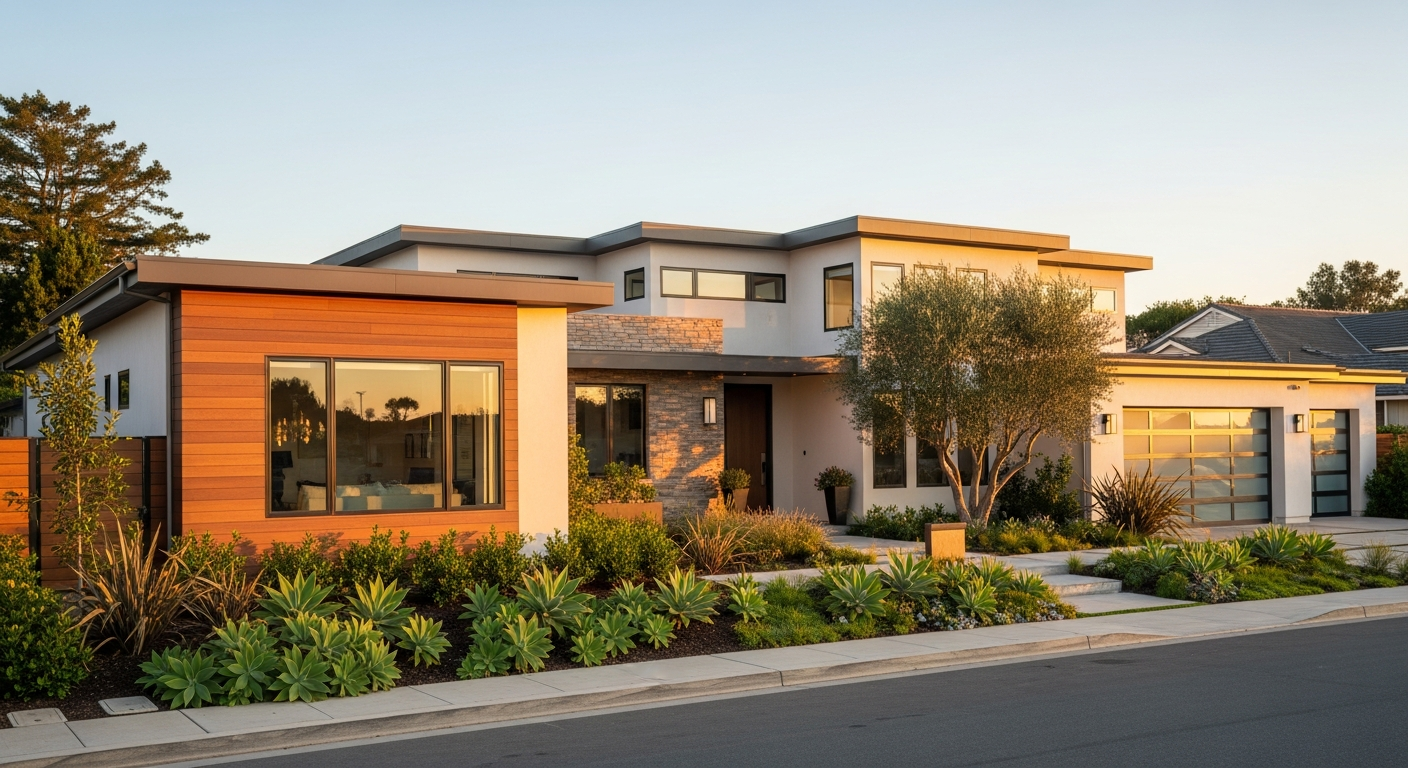
Is it worth it to do staging before selling?
Learn how good staging drives faster offers and higher sale prices, and whether the investment makes financial sense for your home.
Start your listingProtect Your Equity
Median Home Price $1.5M → $65,000 to $80,000 Saved compared to traditional 5–6% commission costs.
The Return on Investment Reality
The most common mistake sellers make is viewing staging as a cost rather than an equity preservation strategy. Industry data from early 2026 confirms that staged homes consistently sell for more than their unstaged counterparts.
According to the National Association of Realtors, professionally staged homes typically net sellers 5 to 15 percent more than unstaged properties . On a $600,000 home, that translates to an extra $30,000 to $90,000 in your pocket. The staging investment itself usually runs between $2,000 and $6,000, depending on the size and scope of the project . The math works out in your favor.
The return on investment numbers are compelling. For every $100 invested in staging, the potential return is approximately $400 . Sellers who spent $500 on staging saw an average return of over 200 percent . An investment of $1,000 in staging can result in a $10,000 higher sale price . When you look at it that way, staging isn't an expense. It's one of the smartest financial moves you can make.
Faster Sales and Avoiding the Stale Zone
Time on market matters because a home that sits too long often triggers price reductions. Staged homes spend significantly less time on the market than unstaged ones. According to industry data, staged homes sell 73 percent faster than non-staged properties .
The numbers tell the story. Professionally staged homes sell in an average of 23 days, while homes that are not staged stay on the market for an average of 143 days . Vacant homes typically take twice as long to sell as staged homes . When you consider that a home sitting for more than a few weeks often requires a price cut to generate fresh interest, staging acts as a firewall against those $10,000 or $20,000 reductions.
The Psychology of Buyer Connection
When a buyer walks into a home, they usually form an emotional opinion within 30 to 60 seconds . If they see clutter, personal photos, or furniture that blocks walkways, their brain registers "work." They start mentally subtracting money from their offer. If they walk into a home that feels clean, open, and easy to live in, they imagine themselves there. That emotional connection is what creates stronger offers.
According to the National Association of Realtors, 81 percent of buyers' agents say staging makes it easier for buyers to visualize the property as their future home . A similar percentage, 82 percent, report that staging helps buyers see the property as a home . Empty rooms actually look smaller to the human eye. Staging provides the reference points needed to understand furniture placement and traffic flow, preventing the "will my couch fit?" anxiety that can kill deals.
Interestingly, staging also helps buyers overlook minor flaws. Thirty-one percent of buyers said that staging made them more likely to overlook property faults . Twenty-seven percent said staging helped them overlook outdated finishes . When you think about it, that makes sense. A well-presented home shifts the buyer's focus to what's possible rather than what's imperfect.
Staging for the Digital-First Buyer
In 2026, the first showing of your home happens on a screen. Nearly 97 percent of home buyers start their search online . Photos of staged homes are the first things 95 percent of buyers look at online .
In a crowded feed, a staged room generates significantly more engagement than an empty one. Buyers spend 40 percent more time looking at images of staged rooms compared to empty ones . High-quality staged photos in online listings generate more views, more showing requests, and ultimately faster offers.
Virtual staging has emerged as a cost-effective alternative, particularly for online marketing. AI virtual staging costs as little as $1.50 to $4.00 for an entire home, compared to $2,800 to $9,000 for traditional physical staging . However, there is a potential downside. Some buyers report a psychological letdown when they see beautiful online photos but walk into a cold, empty house . The most successful sellers often use a hybrid approach: virtual staging for online presence and physical staging for key rooms.
When Staging Makes the Biggest Difference
While every home benefits from some level of preparation, staging is absolutely vital in certain situations.
Vacant homes. Empty houses feel cold and institutional. They photograph poorly, and buyers struggle to understand scale and functionality. Staged vacant homes sell 88 percent faster than unstaged ones .
Homes with outdated décor. If your furniture is dated, it makes the entire house feel dated. Buyers will compare your home to others on the market, and presentation often becomes the tiebreaker.
Higher price points. The more expensive the home, the more competition matters. Staging helps justify premium pricing and attracts serious buyers who expect move-in-ready presentation .
Competitive markets. When buyers have multiple options, the home that shows better wins.
Further Reading
Ready to keep your equity?
Would you like a professional-grade look at your home's value and a personalized roadmap for your sale?
